Komodo Liveaboard Packing List: The Operator’s Must-Bring List, Explained
Short answer. The operator’s own must-bring list is short, and every item on it earns its place: sunblock, sunglasses, a hat, personal snacks, spare clothes, toiletries, swimwear, wet wipes, a power bank, a dry bag, personal medicine, a local SIM, hiking sandals and cash. Snorkelling gear is already on board.
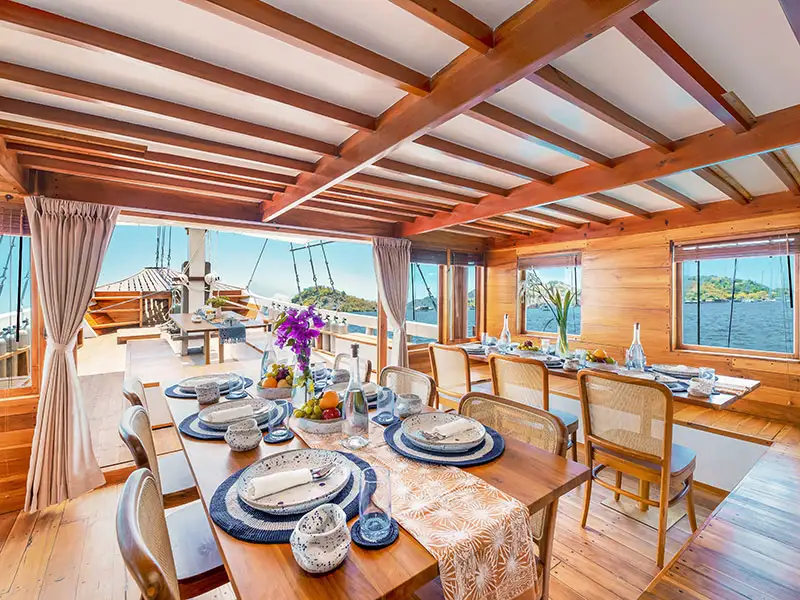
Packing for a phinisi is not packing for a hotel. Space is finite, everything gets damp, and there is no shop. The list below is the operator’s, item by item, with the reason each one is there — because a packing list you understand is a packing list you actually follow.
The list, and why each item is on it
| Item | Why it matters on this trip |
|---|---|
| Sunblock | Six hours a day on open water at eight degrees south. Reef-safe, and applied on board before you land. |
| Sunglasses | Glare off water and pale sand is relentless; a strap stops the first pair going overboard. |
| Beach hat | The Padar ridge and the ranger trail have no shade whatsoever. |
| Personal snacks | Meals are included and generous, but the gaps between them are long and there is no shop. |
| Supplements / vitamins | Nothing is available at sea. Bring what you take daily. |
| Spare clothes | Everything gets salty. Quick-dry beats cotton in every case. |
| Toiletries | Cabins are en-suite but stocked minimally. Bring what you actually use. |
| Swimsuit (two) | One is always wet. This is the single most common packing regret. |
| Wet wipes | Fresh water is finite — 5,500 litres for the whole vessel and everyone on it. |
| Power bank | The one item people wish they had brought twice of. |
| Dry bag | Tender transfers are wet. Phones and cameras do not survive a splash in a tote bag. |
| Personal medicine | Including anything you take for motion sickness, which you should discuss with your doctor before you travel. |
| Local SIM (Telkomsel) | Best coverage in eastern Indonesia, and coverage is patchy at sea regardless. |
| Hiking sandals | Padar’s steps, the dragon trail’s dust, wet rock. One pair covers all three. |
| Cash (rupiah) | Gratuities, anything ashore, and the fact that cards frequently do not work. |
The operator’s published must-bring list, annotated. Not a generic tropical packing list.
What the boat already provides
Do not double up on these. Included in the fare: accommodation for the whole trip, all meals, mineral water, coffee and tea, an English-speaking guide, snorkelling gear, life vests, hotel or airport transfer within mainland Labuan Bajo near the harbour, and premium photo and video documentation with drone, GoPro and mirrorless cameras, supplied as raw footage.
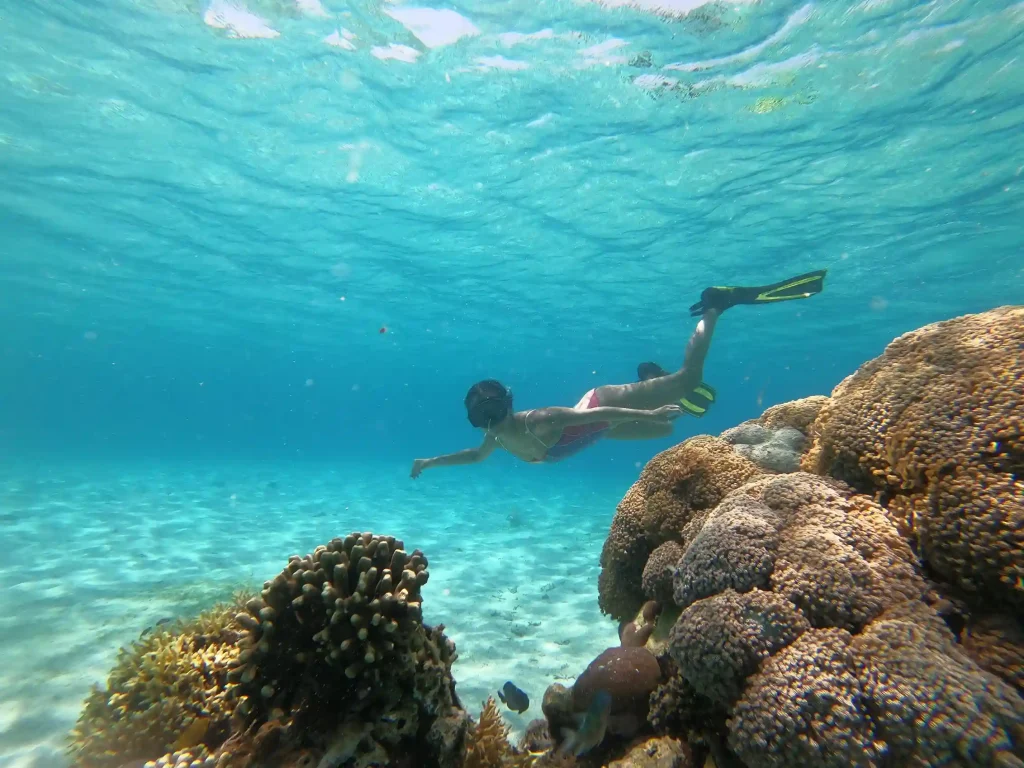
Catnazse is a snorkelling liveaboard. The published inclusions cover snorkelling gear and life vests; there is no compressor, no tank storage, no nitrox and no dive deck on board. If you want to dive in Komodo, that is arranged separately with a licensed Labuan Bajo dive centre. So there is no reason to pack dive gear, and every reason to pack a rash vest instead. What is included on board lists the full set.
Towels are the grey area. They are normally provided, but they are not itemised in the published inclusions, so send one message to the desk rather than arriving hopeful.
Hiking sandals or trainers?
Either, as long as they grip and you are willing to ruin them slightly. The three tests they have to pass are the stepped and partly loose climb up Padar at 06:00, the dry dusty ranger trail on Komodo Island at 11:30, and — on the four-day route — wet limestone at Rangko Cave.
Trainers win on the descent from Padar, which is where the loose ground actually catches people out. Hiking sandals win on everything wet and dry faster afterwards. What fails, every single season, is flip-flops. The trek that decides your footwear explains why in more detail.
Why cash still matters
Crew gratuities are explicitly excluded from the fare, and they are the main reason to carry rupiah. Beyond that: anything you buy in Labuan Bajo before boarding or after disembarking, and the general reality that card terminals in a small Flores port town are unreliable in a way that surprises people arriving from Bali. Withdraw in town, keep it in a dry bag, and do not plan to top up at sea.
How it all fits in one soft bag
Three days aboard needs less than people pack. A working set for the standard itinerary: two swimsuits, three quick-dry tops, two pairs of shorts, one long-sleeve layer for the evening breeze, a rash vest, sleepwear, one set of clothes kept dry for disembarkation, and the shoes you climb in. That is it.
Pack in two zones. Everything that will get wet — swimwear, rash vest, snorkelling extras — in one bag; everything that must stay dry — the disembarkation set, electronics, documents — in another, inside the dry bag. Salt migrates through a shared compartment faster than you would believe, and a phinisi has no dry room in which to sort it out later.
Laundry is not a service at sea, and fresh water is finite at 5,500 litres for the whole vessel. Rinse swimwear sparingly, dry it on the sun deck rather than in the cabin, and accept that everything will smell faintly of sea by day three. That is the correct outcome.
What to leave at the hotel
Your main suitcase. Anything hard-sided. Formal clothes — there is no dress code on a phinisi and nowhere to wear them. Hair dryers and anything else with a heavy draw, given a 33KVa generator is running the whole vessel. Valuables you would be upset to lose to salt water. Laptops, unless you genuinely enjoy carrying a laptop somewhere with no reliable internet — the honest answer on connectivity covers what to expect there.
Cabin storage is real but modest; the eight cabins are compared side by side on the cabin page. If you are travelling with more than you can carry aboard in one go, the hotel-hold trick is standard practice and universally accommodated.
The operator’s pre-departure briefing covers the same ground across the fleet, and the desk will send it to you before you fly.
Komodo National Park entrance and activity fees are charged on top of every cruise price quoted on this site. Reported tariffs across 2025 and 2026 run from roughly IDR 150,000 to IDR 350,000 per person per day, with higher weekend and public-holiday tiers, and the structure has been revised more than once — ask the booking desk for a written breakdown covering your exact dates and route before you pay anything.
Frequently asked questions
What shoes do I need for a Komodo liveaboard?
Do I need to bring snorkelling gear?
Should I bring cash?
Are towels provided?
How much luggage can I bring?
Ask the crew directly
Ask us for the pre-departure pack for your specific departure before you start packing. Catnazse Liveaboard is operated by Komodo Luxury, part of Juara Holding Group, working out of Labuan Bajo since 2015.
WhatsApp: +62 811 3823 875
Email: [email protected]
Instagram: @catnazse.liveaboard