Pink Beach (Pantai Merah): Why It Is Pink, and How to Photograph It Properly
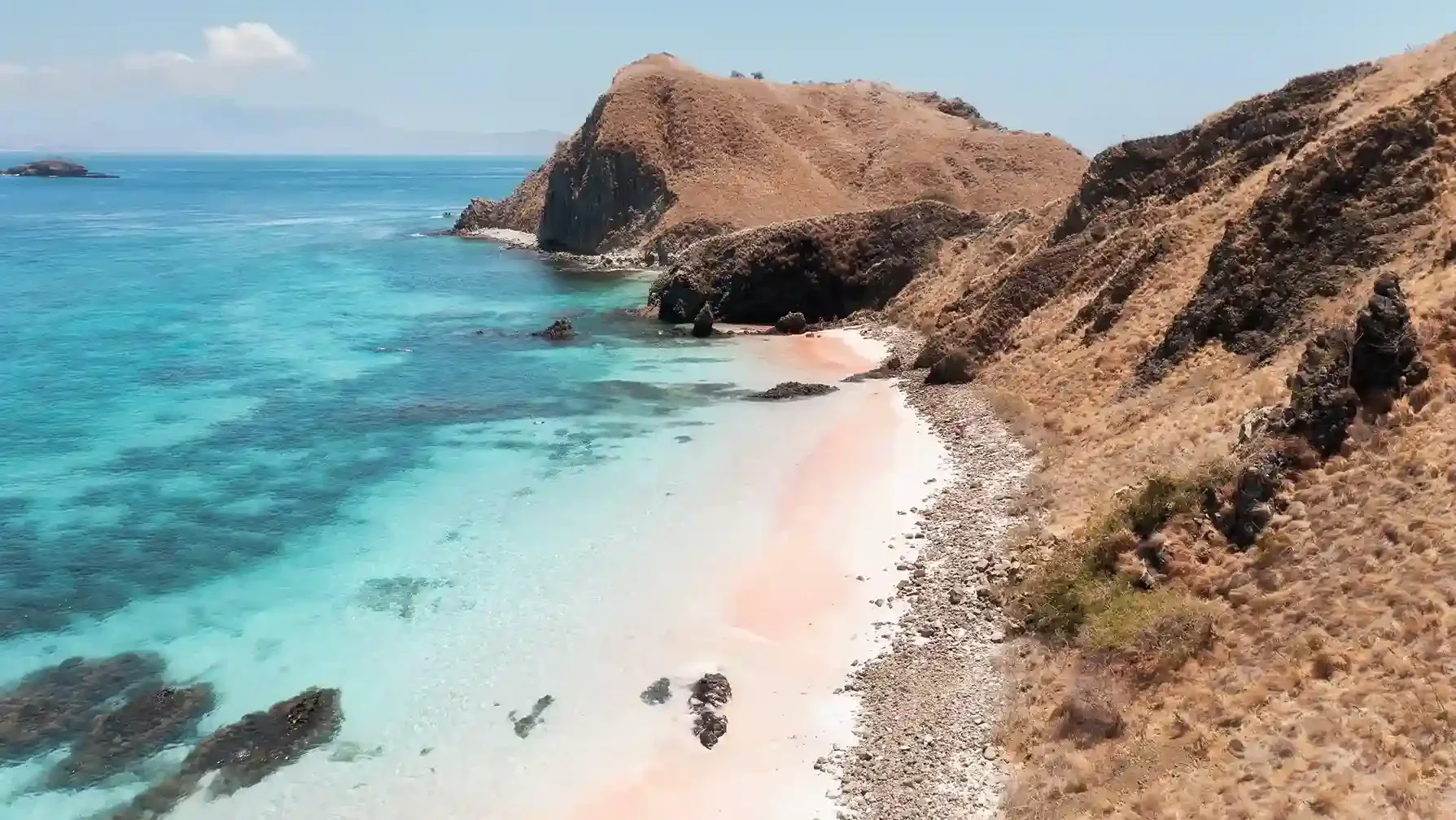
Short answer. Pink Beach — Pantai Merah — gets its colour from crushed red organ-pipe coral mixed into white sand. Catnazse arrives around 09:00 on day two, after Padar. The colour reads strongest on wet sand at the waterline in bright morning light, and it is a blush in person, not magenta.
There are a handful of pink-sand beaches in the world and Komodo has one of the more accessible. It is also one of the most heavily edited places on Indonesian Instagram, which sets up an expectation gap worth closing before you arrive.
Where does the colour come from?
Organ-pipe coral — Tubipora musica — has a deep red skeleton. As it breaks down, the fragments wash ashore and mix with the white calcium carbonate sand produced by every other reef organism nearby. What you see is a ratio: more red fragments in a given stretch of sand, more colour. That is why the beach is not uniformly pink but patchy, with the strongest tone at the tideline where the finest material settles and the sand is wet.
It also explains the rule about taking sand home. Every handful removed is a small, permanent subtraction from a finite supply that took a reef a very long time to make.
When does it look best?
| Condition | Effect on the colour |
|---|---|
| Bright mid-morning sun | Strongest — the Catnazse arrival at 09:00 sits in this window |
| Overcast light | Flat and grey; the pink largely disappears |
| Wet sand at the waterline | The most saturated tone on the whole beach |
| Dry sand higher up | Pale, closer to cream with a warm cast |
| Low tide | More exposed pink sand to walk on |
| Late afternoon | Warm light helps, but you are usually elsewhere by then |
Practical observations for the morning stop on the published day-two schedule.
What is the snorkelling like?
Genuinely good, and unusually easy. You walk in from the sand into shallow water and the reef starts close in — hard and soft corals, reef fish, occasional turtles. Because there is no boat entry and no current to speak of in the bay, this is the stop where nervous swimmers usually relax. Gear and life vests are provided. Catnazse is a snorkelling liveaboard. The published inclusions cover snorkelling gear and life vests; there is no compressor, no tank storage, no nitrox and no dive deck on board. If you want to dive in Komodo, that is arranged separately with a licensed Labuan Bajo dive centre.
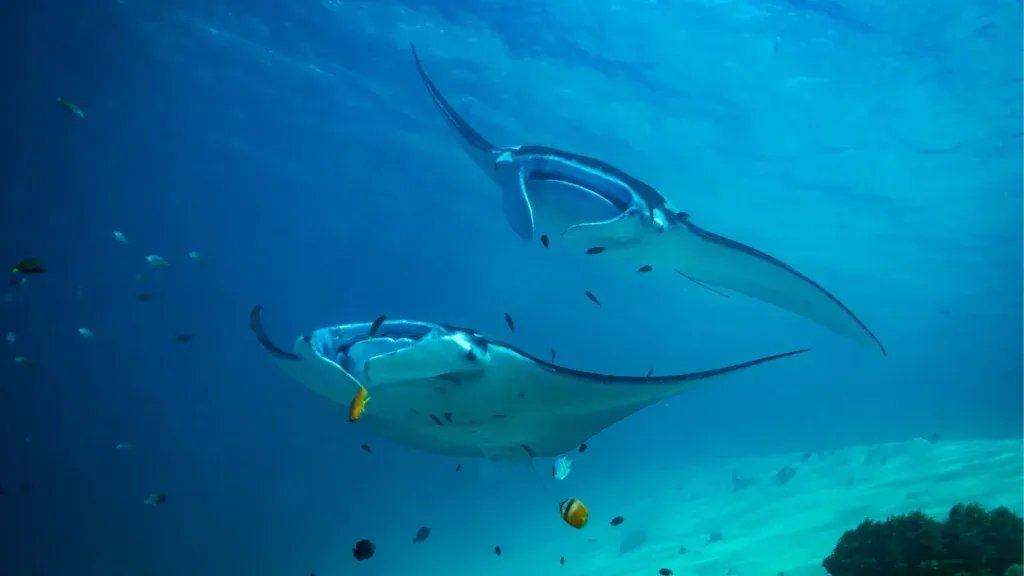
It is also where the mask-fitting problems from day one get solved, because you can stand up. Take the chance to sort it out here rather than at the manta drift later in the day.
Photographing it properly
- Shoot the wet sand. Get low, put the waterline in the frame, and let the contrast between wet pink and turquoise water do the work.
- Include something white. A white shirt or a piece of driftwood gives the eye a reference point and makes the pink read as pink rather than as a colour cast.
- Avoid the middle of the day. Not usually a problem here — you arrive at 09:00.
- Do not crank the saturation. The reason everyone says “it wasn’t that pink” is that they were comparing reality to somebody’s slider.
- Polarising filter. Cuts glare off wet sand and deepens the water.
Drone shots of the beach are spectacular and also the part people get wrong. A national park drone permit is optional but must be requested about seven days ahead, and the operator estimates it at around IDR 2,100,000. Crew documentation with drone, GoPro and mirrorless cameras is already included in the fare as raw footage, which is why most guests skip the permit. Read the rules before you fly a drone here.
How long do you get, and what else is in the bay?
The stop is short by design — roughly an hour on the published schedule, between arriving at 09:00 and leaving for Komodo Island at 10:00. That is enough to swim, snorkel the near reef, walk the sand and take the photographs, and not enough to lie down and read a book. If you want a long beach afternoon, it is the day-four island stops on the four-day itinerary that give you one, not this.
Pink Beach sits on the eastern shore of Komodo Island itself, which is worth knowing for two reasons. The first is that you are already inside dragon habitat: sightings on the beach are uncommon but not unheard of, and you stay with the group. The second is that the boat is only a short run from the ranger station where the trek starts at 11:30, which is why the two stops sit back to back in the schedule rather than on separate days.
Shade is minimal. Sunblock goes on before you land, hats are sensible, and the tender runs back to the boat if anyone has had enough.
Leave-no-trace, specifically here
No sand, no coral, no shells. Take rubbish back to the boat rather than leaving it in a bin ashore that somebody has to ship out. Reef-safe sunblock, applied on board before you land, so it is absorbed before you enter the water. Stand on sand, never on coral.
Where it sits in your day
Pink Beach is the second stop of the biggest day on the itinerary: Padar at dawn, Pink Beach at 09:00, Komodo Island at 11:30, Manta Point at 14:30, Taka Makassar at 16:30. Day two of the route covers the whole sequence, and the single-night itinerary reaches Pink Beach too if your dates are tight. For the fleet-level view of what to bring for a beach-and-trek morning, see the operator’s packing guidance.
Komodo National Park entrance and activity fees are charged on top of every cruise price quoted on this site. Reported tariffs across 2025 and 2026 run from roughly IDR 150,000 to IDR 350,000 per person per day, with higher weekend and public-holiday tiers, and the structure has been revised more than once — ask the booking desk for a written breakdown covering your exact dates and route before you pay anything.
Frequently asked questions
Why is Pink Beach pink?
What time does Catnazse reach Pink Beach?
Can you snorkel at Pink Beach?
Is the beach really bright pink?
Can I take sand or coral home?
Ask the crew directly
Ask which departures put your Pink Beach stop in the best morning light. Catnazse Liveaboard is operated by Komodo Luxury, part of Juara Holding Group, working out of Labuan Bajo since 2015.
WhatsApp: +62 811 3823 875
Email: [email protected]
Instagram: @catnazse.liveaboard