Komodo or Raja Ampat: Which Indonesian Liveaboard Trip Suits You

Short answer. Komodo is the shorter, more accessible, more varied land-and-sea trip: dragons, the Padar ridge, Pink Beach and mantas, an hour’s flight from Bali. Raja Ampat is the longer, remoter, reef-first journey. For a first visit to Indonesia, Komodo is usually the right answer.

Both are run by the same operator group, so there is no reason for this page to talk one of them down. What follows is the comparison we would give a friend.

Access and travel time

This is the difference that decides more trips than anything about the water. Labuan Bajo’s Komodo Airport is roughly an hour from Bali and about two and a half hours non-stop from Jakarta. You can land in Bali in the morning and be in Labuan Bajo the same afternoon.

Raja Ampat sits at the far western tip of Papua. Getting there means a domestic flight to Sorong — usually via Jakarta or Makassar, frequently overnight — then a ferry or transfer onward. It is not difficult, but it is a travel day in each direction, and that changes the minimum sensible trip length.

Komodo (Labuan Bajo)Raja Ampat (Sorong)
Access from Bali~1 hour direct flightMulti-leg, often overnight
Sensible minimum trip2–3 nights aboard5–7 nights aboard
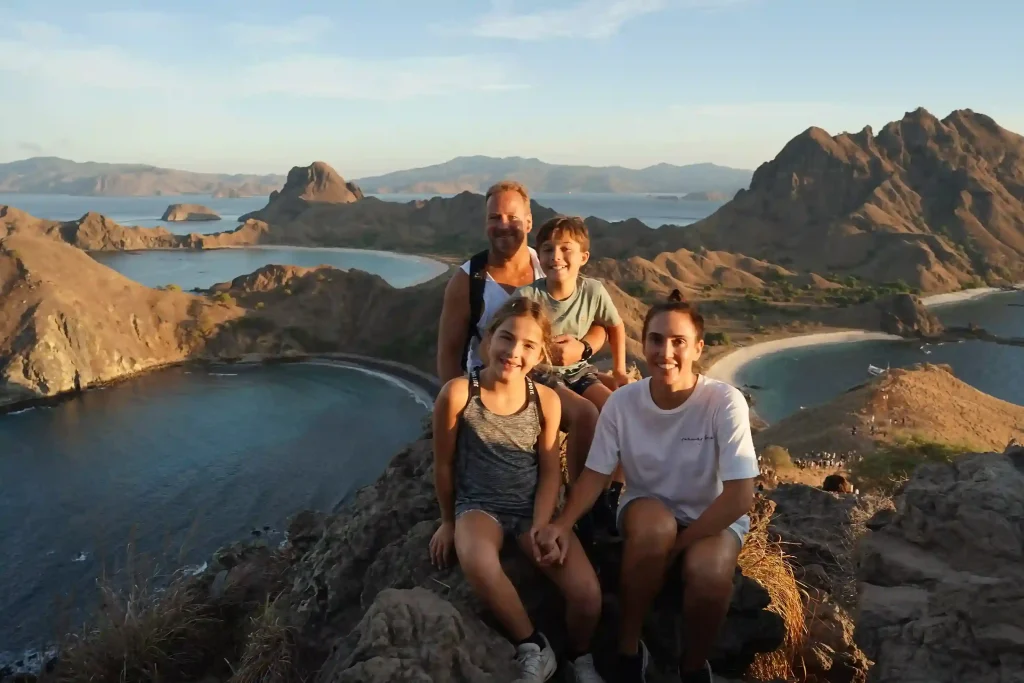
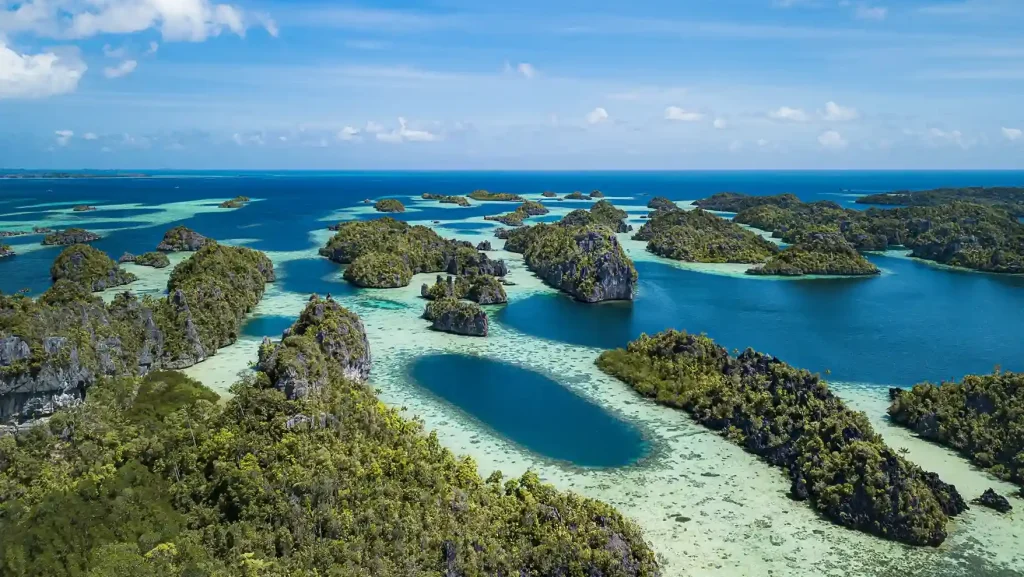
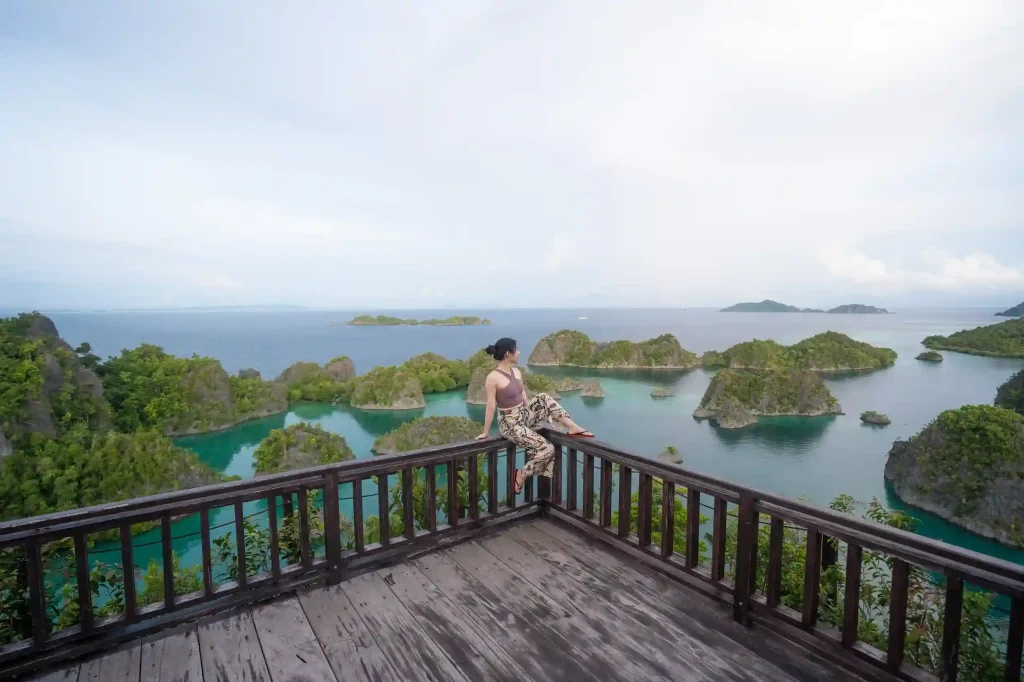
Signature landscapePadar ridge, three-bay viewKarst islands, Piaynemo lookout
Signature wildlifeKomodo dragons, manta raysReef biodiversity, mantas, wobbegongs
Land componentSubstantial — treks on two islandsLimited — mostly viewpoints
Reef biodiversityHighAmong the highest recorded anywhere
Best seasonCalm window May–early OctoberBroadly October–April
Trip cost profileLower total, shorter tripsHigher total, longer trips

Comparison for planning purposes. Season windows are general patterns rather than guarantees.

What you actually see

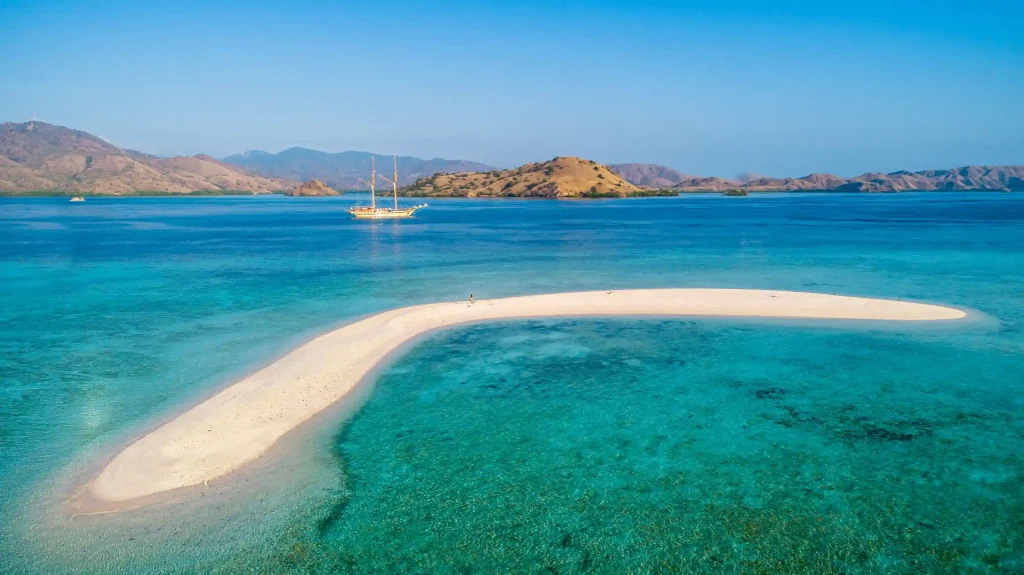
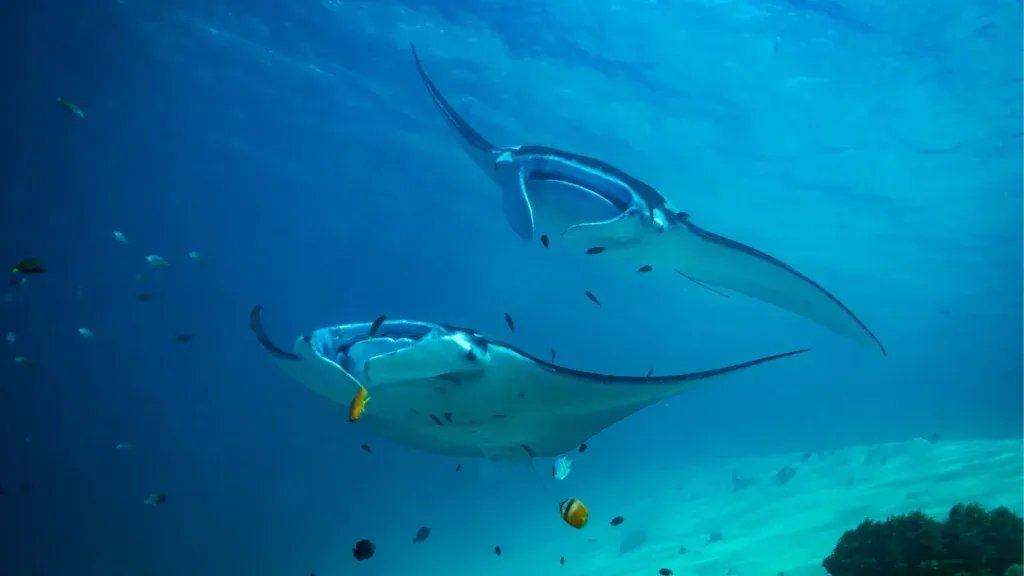
Komodo’s strength is variety. In three days you climb a ridge at dawn, walk a dry-forest trail behind a ranger looking for the largest lizard on earth, swim off a pink beach, drift over a manta cleaning station and stand on a sandbar with nothing on it. No two stops feel the same, and roughly half the trip happens on land.

Raja Ampat’s strength is depth in one direction. The reefs are extraordinary by any measure — species counts there are among the highest recorded anywhere — and the karst seascape is genuinely unlike anywhere else. But it is a marine trip. If your travelling companions include someone who does not much like being in the water, Komodo carries them and Raja Ampat does not.

Season windows barely overlap

This is the practical planning point people miss. Komodo’s calm, settled window runs May to early October, with June, July and September strongest. Raja Ampat’s better months run broadly October to April. They are close to complementary, which means your travel dates may make the decision for you before your preferences do. The Komodo month-by-month guide sets out that side in detail.

Cost, honestly

Komodo works out cheaper as a total, mostly because trips are shorter and access is a single short flight. Catnazse’s published 2026 whole-boat rate for three days and two nights is USD 7,100 for up to twelve guests, with open-trip cabins from USD 430 to USD 680 per person. A Raja Ampat liveaboard of five to seven nights, plus the flights to reach it, is a materially larger commitment.

Per night on a comparable vessel the two are closer than the totals suggest. You are mostly paying for duration and remoteness rather than for a different standard of boat. Komodo pricing is published in full here so you can make that comparison yourself.

Trip length: what the extra days actually buy

The two destinations reward duration differently, and this is where people mis-plan.

In Komodo, the core circuit is finished in three days. A fourth day adds Rangko Cave, Seraya and the near-Labuan-Bajo islands — pleasant, restful, and not more of the same headline sites. Beyond that, five to seven-night Komodo sailings exist and are custom-routed by request rather than following a published itinerary. The published 2026 ladder runs from USD 5,900 for 2D1N to USD 12,450 for 7D6N on a whole-boat basis, and the fourth-day guide looks at whether that first extra day is worth it.

In Raja Ampat the opposite holds: the archipelago is large, the sites are spread out, and a short trip spends a disproportionate share of itself moving between them. Five to seven nights is close to the minimum for the trip to make sense, which is part of why the total cost sits where it does.

So which should you book?

First time in Indonesia, two weeks or less, travelling with people of mixed interests: Komodo. It is easier, more varied, and it leaves room in the itinerary for Bali on either side. The Komodo option starts at three days.

Experienced in Indonesia, reef-focused, with a week or more and a tolerance for travel days: Raja Ampat. The operator’s Raja Ampat programme covers it properly.

One caveat that matters for the reef-first traveller: Catnazse is a snorkelling liveaboard. The published inclusions cover snorkelling gear and life vests; there is no compressor, no tank storage, no nitrox and no dive deck on board. If you want to dive in Komodo, that is arranged separately with a licensed Labuan Bajo dive centre. If diving is the point of your trip, plan that separately from this vessel in either destination.

Komodo National Park entrance and activity fees are charged on top of every cruise price quoted on this site. Reported tariffs across 2025 and 2026 run from roughly IDR 150,000 to IDR 350,000 per person per day, with higher weekend and public-holiday tiers, and the structure has been revised more than once — ask the booking desk for a written breakdown covering your exact dates and route before you pay anything.

Frequently asked questions

Is Komodo or Raja Ampat better?
They answer different questions. Komodo is shorter, easier to reach and mixes land and sea — dragons, Padar, Pink Beach, mantas. Raja Ampat is longer, remoter and reef-first. For a first trip to Indonesia, Komodo is usually the better fit.
Which is easier to get to?
Komodo, by a wide margin. Labuan Bajo is about an hour’s flight from Bali. Raja Ampat requires a longer multi-leg journey through Sorong.
Which is better for snorkelling?
Raja Ampat has the higher reef biodiversity by most measures. Komodo has mantas at a reliable, accessible site plus a landscape and wildlife programme that Raja Ampat does not attempt.
Can I do both on one trip?
You can, but not comfortably in under two weeks, and the internal flights are substantial. Most people who do both do them on separate trips.
Which is cheaper?
Komodo, generally, because the trips are shorter and access costs less. Per night on a comparable vessel the two are closer than the total trip cost suggests.

Ask the crew directly

Tell us your dates and we will say honestly which of the two fits them better. Catnazse Liveaboard is operated by Komodo Luxury, part of Juara Holding Group, working out of Labuan Bajo since 2015.

WhatsApp: +62 811 3823 875
Email: [email protected]
Instagram: @catnazse.liveaboard

The Fourth Day: Rangko Cave, Seraya, Sabolo and Bidadari Explained

Short answer. Rangko Cave, Seraya, Sabolo and Bidadari are the day-four additions on the Catnazse four-day itinerary. None of them appear on the three-day route. On 2026 whole-boat rates the extra day costs USD 1,800 for one to twelve guests and adds four sites, most of them close to Labuan Bajo.

The three-day itinerary is the classic Komodo route and it covers the famous things. The fourth day is a different proposition: quieter, closer to Flores, and largely about water rather than landscape. Whether that is worth an extra USD 1,800 on the whole-boat rate depends entirely on what you came for.

Rangko Cave: the saltwater pool

Rangko sits on the Flores mainland north of Labuan Bajo. You land, cross a short stretch of shore, and drop into a limestone cavity holding a pool of clear seawater. A shaft of daylight comes through an opening above, and depending on the hour it lands on the water as a distinct beam or lights the whole chamber a pale blue-green.

Practicalities: the rock is uneven and wet, so footwear with grip matters more here than at any beach stop. The water is noticeably cooler than the sea outside. It is a swim, not a snorkel — there is nothing to look at underwater, and the point is the light. Guests who dislike enclosed spaces skip it without fuss.

Timing is the variable nobody mentions: the light beam depends on the sun’s angle, so an early arrival and a late arrival produce quite different photographs of the same cave.

Seraya, Sabolo and Bidadari

StopWhat it isWhat you do there
Rangko CaveLimestone cave with a saltwater pool, Flores mainlandSwim in still, cool water under a light shaft
Seraya IslandSmall island with reef and beach, north of Labuan BajoSnorkelling and beach time in calm water
Sabolo IslandTwin small islands close to Labuan BajoShallow reef snorkelling, quiet beach
Bidadari IslandNearest island to Labuan Bajo harbourReef snorkelling, last swim before disembarking

Day-four stops as published for the four-day itinerary. Sabolo or Bidadari is taken depending on conditions and timing.

The common thread is that all three island stops are close in, sheltered and easy. After the concentrated day two — Padar, Pink Beach, the dragon trek, mantas, the sandbar — day four is deliberately low intensity. Nobody hikes anything.

Is the extra day worth the price difference?

2026 whole-boat rate1–12 guests13–18 guests
3D2NUSD 7,100USD 7,700
4D3NUSD 8,900USD 9,500
DifferenceUSD 1,800USD 1,800

Operator’s published 2026 charter rates. Park fees are excluded from both.

Split across a full boat of twelve, the extra day is USD 150 per person for four additional sites, an extra night aboard and an extra full day of meals and crew. Split across four guests it is USD 450 each. The arithmetic is straightforward; the judgement is not.

Take the fourth day if you want a genuinely relaxed close to the trip, if you are travelling with people who found day two exhausting, or if Rangko specifically appeals. Skip it if your priority is the famous sites, if your flight schedule is tight, or if you would rather put the same money toward a better cabin. The 4D3N page has the full route and pricing; the shorter route for comparison covers what the three-day version already gives you.

Who the fourth day genuinely suits

Three groups say yes to it consistently.

Families with younger children. Day two on the standard route is relentless — a hill at dawn, a beach, a ranger trek in the midday heat, a drift snorkel and a sandbar. A fourth day of sheltered water and short swims is where children recover and parents finally sit down. The family charter page goes into how the routing is usually adjusted.

Groups who have flown a long way. If getting to Labuan Bajo took you two flights and a night in Bali, spending one more day on the water rather than in a hotel is close to free in real terms — you were paying for accommodation somewhere regardless.

Anyone chartering the whole boat. The marginal cost per person falls sharply with group size, and a private charter is already about having the boat run at your pace rather than the schedule’s. The whole-boat charter page has the rate ladder in full.

The group it does not suit: couples on a tight schedule who want the famous sites and then want to be somewhere else. For them the three-day route is not a compromise, it is the correct product.

What the fourth day does to your logistics

You disembark a day later, which means one more night of accommodation avoided ashore but a later flight out of Labuan Bajo. The return leg on day four is short — Sabolo and Bidadari are close to the harbour — so the disembarkation time is not unusually late. Conditions on the shorter inshore legs are generally settled, though the seasonal picture in the month-by-month sea guide still applies. For the operator’s fleet-wide view of how guests rate the longer routes, see the operator’s guest reviews.

Komodo National Park entrance and activity fees are charged on top of every cruise price quoted on this site. Reported tariffs across 2025 and 2026 run from roughly IDR 150,000 to IDR 350,000 per person per day, with higher weekend and public-holiday tiers, and the structure has been revised more than once — ask the booking desk for a written breakdown covering your exact dates and route before you pay anything.

Frequently asked questions

What is on day four of the Catnazse 4D3N?
Rangko Cave, Seraya Island, and then Sabolo or Bidadari Island on the run back toward Labuan Bajo. None of those four appear on the three-day itinerary.
Is Rangko Cave worth it?
If you like water and light, yes — it is a saltwater pool inside a limestone cave, lit by a shaft of daylight. If you are claustrophobic or unsteady on rock, it is the stop to sit out.
How much more does the fourth day cost?
On 2026 whole-boat rates the step from 3D2N to 4D3N is USD 7,100 to USD 8,900 for one to twelve guests — an extra USD 1,800 for the day, or USD 1,800 for four additional sites.
Do I swim in Rangko Cave?
Yes, that is the point of going. It is a swim in still, clear, slightly cool saltwater with light coming through from above.
Is Bidadari or Sabolo better?
They serve the same purpose — a last reef and beach stop close to Labuan Bajo before you disembark. Which one you get depends on conditions and timing on the day.

Ask the crew directly

Ask us to price the three-day and four-day versions side by side for your group size. Catnazse Liveaboard is operated by Komodo Luxury, part of Juara Holding Group, working out of Labuan Bajo since 2015.

WhatsApp: +62 811 3823 875
Email: [email protected]
Instagram: @catnazse.liveaboard

Taka Makassar and Kalong Island: The Sandbar and the Bat Sunset

Short answer. Taka Makassar is a tide-dependent sandbar visited around 16:30 on day two, right after the manta stop. Kalong Island is the day-one sunset anchorage where thousands of flying foxes lift off at dusk. Neither is the headline attraction of a Komodo trip, and both are usually the memory people keep.

Every Komodo itinerary sells itself on dragons, Padar and mantas. Ask guests six months later what they actually remember and a surprising number describe a sandbar in the middle of nowhere and a sky full of bats.

What exactly is Taka Makassar?

A curved bar of coral sand sitting on a shallow submerged reef, with nothing on it. No trees, no shelter, no structure. It appears, changes shape and partially disappears according to the tide, so the crescent you walk on is not the same crescent somebody photographed last month.

That is the whole appeal and also the whole constraint. Visit at high water and there is very little sand and a lot of ankle-deep sea. Visit on a falling tide and you get the long pale curve with turquoise on both sides that ended up in the brochure. Timing here is not a nice-to-have — it is the entire experience, and it is the reason the stop sits where it does in the schedule.

Taka MakassarKalong Island
What it isSubmerged-reef sandbar, no vegetationMangrove island east of Labuan Bajo
Position on the 3D2NDay two, around 16:30Day one, around 16:30 to overnight anchorage
Why you goSandbar walk, shallow snorkelling, photographsFlying-fox exodus at dusk, sunset, dinner at anchor
What decides the experienceTide stateCloud cover and how sharply the light goes
Time ashoreShort — usually under an hourNone; watched from the deck
SnorkellingYes, shallow reef around the barNo
Best captured withWide angle or drone from heightYour eyes, honestly

Positions and timings from the operator’s published three-day schedule.

The snorkelling around the bar

Shallow, calm on the leeward side and easy — reef fish, coral heads and clear water when conditions are kind. It is a gentler stop than the drift you have just done at Manta Point next door, and a good one for anyone who found that current intimidating. Catnazse is a snorkelling liveaboard. The published inclusions cover snorkelling gear and life vests; there is no compressor, no tank storage, no nitrox and no dive deck on board. If you want to dive in Komodo, that is arranged separately with a licensed Labuan Bajo dive centre.

Kalong Island: what the bat flight actually looks like

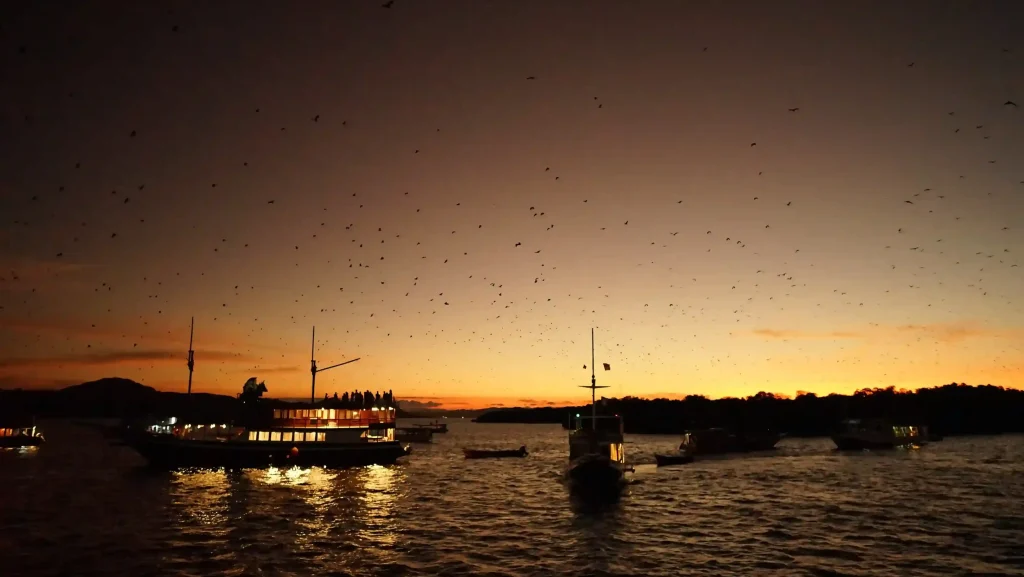
The boat anchors off the mangroves in the late afternoon on day one. Dinner is being prepared. The light goes orange, then pink. And then, over roughly twenty minutes, the mangroves empty: thousands of large fruit bats — flying foxes, with wingspans you can see clearly from the deck — lift off in loose streams and head across the water toward Flores to feed on fruit trees inland.

It is not dramatic in a cinematic way. It is quiet, it goes on longer than you expect, and it keeps restarting after you think it has finished. People stop talking. That is the whole review.

The practical notes: sit on the sun deck rather than inside, have a light layer because the breeze picks up after sunset, and put the phone down. This is the single hardest thing on the itinerary to photograph on a handset, and one of the easiest to simply enjoy.

What to take to a sandbar with nothing on it

Taka Makassar has no shade, no fresh water, no shelter and nowhere to put anything down that will not be wet within the hour. Treat it as a swim stop with a walk attached rather than a beach.

  • Sunblock applied on board. There is nothing to hide under and the reflected glare off pale sand and shallow water is fierce.
  • Something on your feet in the water. The bar itself is soft sand, but the reef edge is not.
  • A dry bag or nothing at all. Most guests take a camera and leave everything else on the boat, which is the right call.
  • A rash vest. Late afternoon sun at this latitude is still strong at 16:30.

The stop is short — usually under an hour — because there is no reason for it to be long and because the tide is moving underneath you the whole time. Everything on the packing side is covered in the operator’s must-bring list.

Why these two stops are structured the way they are

Both depend on being at anchor at a specific hour rather than passing through. A day boat out of Labuan Bajo cannot be off Kalong at dusk and back at the harbour at a sensible hour, and it cannot reliably hit Taka Makassar on a falling tide late in the afternoon. Sleeping aboard is what makes both of them possible, which is the same structural point made in the boat-versus-hotel comparison.

Where these stops sit in the route gives the full hour-by-hour picture, and the 2D1N route that also anchors at Kalong keeps the bat sunset even on a single night. Transfers, boarding and the logistics around all of it are handled by the operator’s transfer and logistics desk.

Komodo National Park entrance and activity fees are charged on top of every cruise price quoted on this site. Reported tariffs across 2025 and 2026 run from roughly IDR 150,000 to IDR 350,000 per person per day, with higher weekend and public-holiday tiers, and the structure has been revised more than once — ask the booking desk for a written breakdown covering your exact dates and route before you pay anything.

Frequently asked questions

What is Taka Makassar?
A small crescent sandbar sitting on a submerged reef near Karang Makassar. It has no vegetation and no permanent shape — the tide rebuilds it constantly, which is why photographs of it never quite match.
What time do you visit Taka Makassar?
Around 16:30 on day two of the Catnazse three-day itinerary, straight after the manta stop. Late-afternoon light and a falling sun make it the prettiest hour of the day there.
What happens at Kalong Island?
At around 16:30 on day one the boat anchors off Kalong and thousands of flying foxes lift out of the mangroves at dusk, streaming across the sky toward Flores to feed. You watch it from the deck with dinner being prepared behind you.
Are the bats dangerous?
No. They are fruit bats, they are heading somewhere else, and they pass overhead at height. You watch, you do not interact.
Will my phone capture the bat flight?
Poorly. It is low light, the subjects are small, fast and distant. Watch it with your eyes and let the crew’s mirrorless and drone footage — included in the fare as raw files — do the recording.

Ask the crew directly

Ask us how the tide falls on your dates and what that means for the sandbar stop. Catnazse Liveaboard is operated by Komodo Luxury, part of Juara Holding Group, working out of Labuan Bajo since 2015.

WhatsApp: +62 811 3823 875
Email: [email protected]
Instagram: @catnazse.liveaboard

Pink Beach (Pantai Merah): Why It Is Pink, and How to Photograph It Properly

Short answer. Pink Beach — Pantai Merah — gets its colour from crushed red organ-pipe coral mixed into white sand. Catnazse arrives around 09:00 on day two, after Padar. The colour reads strongest on wet sand at the waterline in bright morning light, and it is a blush in person, not magenta.

There are a handful of pink-sand beaches in the world and Komodo has one of the more accessible. It is also one of the most heavily edited places on Indonesian Instagram, which sets up an expectation gap worth closing before you arrive.

Where does the colour come from?

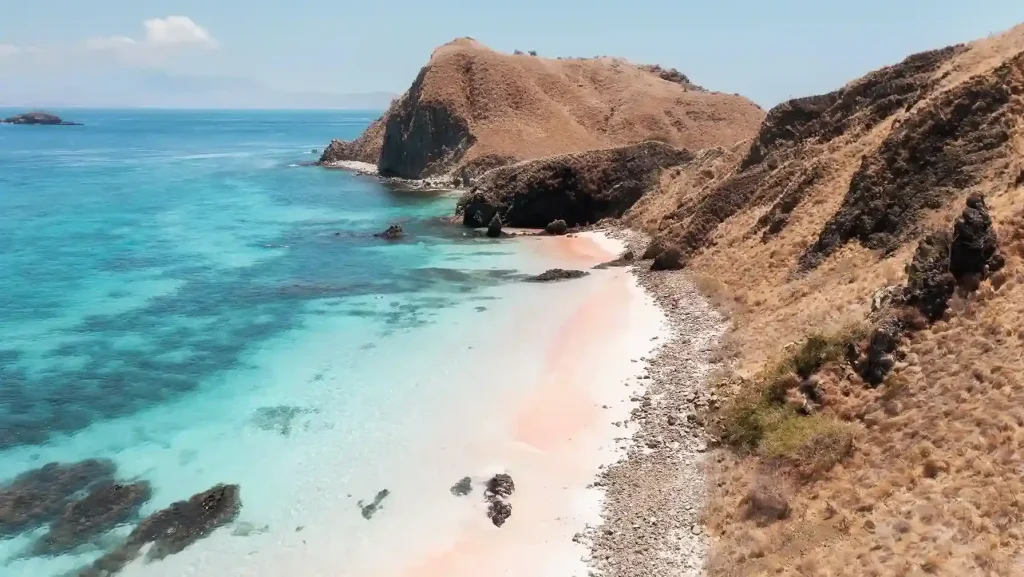
Organ-pipe coral — Tubipora musica — has a deep red skeleton. As it breaks down, the fragments wash ashore and mix with the white calcium carbonate sand produced by every other reef organism nearby. What you see is a ratio: more red fragments in a given stretch of sand, more colour. That is why the beach is not uniformly pink but patchy, with the strongest tone at the tideline where the finest material settles and the sand is wet.

It also explains the rule about taking sand home. Every handful removed is a small, permanent subtraction from a finite supply that took a reef a very long time to make.

When does it look best?

ConditionEffect on the colour
Bright mid-morning sunStrongest — the Catnazse arrival at 09:00 sits in this window
Overcast lightFlat and grey; the pink largely disappears
Wet sand at the waterlineThe most saturated tone on the whole beach
Dry sand higher upPale, closer to cream with a warm cast
Low tideMore exposed pink sand to walk on
Late afternoonWarm light helps, but you are usually elsewhere by then

Practical observations for the morning stop on the published day-two schedule.

What is the snorkelling like?

Genuinely good, and unusually easy. You walk in from the sand into shallow water and the reef starts close in — hard and soft corals, reef fish, occasional turtles. Because there is no boat entry and no current to speak of in the bay, this is the stop where nervous swimmers usually relax. Gear and life vests are provided. Catnazse is a snorkelling liveaboard. The published inclusions cover snorkelling gear and life vests; there is no compressor, no tank storage, no nitrox and no dive deck on board. If you want to dive in Komodo, that is arranged separately with a licensed Labuan Bajo dive centre.

It is also where the mask-fitting problems from day one get solved, because you can stand up. Take the chance to sort it out here rather than at the manta drift later in the day.

Photographing it properly

  • Shoot the wet sand. Get low, put the waterline in the frame, and let the contrast between wet pink and turquoise water do the work.
  • Include something white. A white shirt or a piece of driftwood gives the eye a reference point and makes the pink read as pink rather than as a colour cast.
  • Avoid the middle of the day. Not usually a problem here — you arrive at 09:00.
  • Do not crank the saturation. The reason everyone says “it wasn’t that pink” is that they were comparing reality to somebody’s slider.
  • Polarising filter. Cuts glare off wet sand and deepens the water.

Drone shots of the beach are spectacular and also the part people get wrong. A national park drone permit is optional but must be requested about seven days ahead, and the operator estimates it at around IDR 2,100,000. Crew documentation with drone, GoPro and mirrorless cameras is already included in the fare as raw footage, which is why most guests skip the permit. Read the rules before you fly a drone here.

How long do you get, and what else is in the bay?

The stop is short by design — roughly an hour on the published schedule, between arriving at 09:00 and leaving for Komodo Island at 10:00. That is enough to swim, snorkel the near reef, walk the sand and take the photographs, and not enough to lie down and read a book. If you want a long beach afternoon, it is the day-four island stops on the four-day itinerary that give you one, not this.

Pink Beach sits on the eastern shore of Komodo Island itself, which is worth knowing for two reasons. The first is that you are already inside dragon habitat: sightings on the beach are uncommon but not unheard of, and you stay with the group. The second is that the boat is only a short run from the ranger station where the trek starts at 11:30, which is why the two stops sit back to back in the schedule rather than on separate days.

Shade is minimal. Sunblock goes on before you land, hats are sensible, and the tender runs back to the boat if anyone has had enough.

Leave-no-trace, specifically here

No sand, no coral, no shells. Take rubbish back to the boat rather than leaving it in a bin ashore that somebody has to ship out. Reef-safe sunblock, applied on board before you land, so it is absorbed before you enter the water. Stand on sand, never on coral.

Where it sits in your day

Pink Beach is the second stop of the biggest day on the itinerary: Padar at dawn, Pink Beach at 09:00, Komodo Island at 11:30, Manta Point at 14:30, Taka Makassar at 16:30. Day two of the route covers the whole sequence, and the single-night itinerary reaches Pink Beach too if your dates are tight. For the fleet-level view of what to bring for a beach-and-trek morning, see the operator’s packing guidance.

Komodo National Park entrance and activity fees are charged on top of every cruise price quoted on this site. Reported tariffs across 2025 and 2026 run from roughly IDR 150,000 to IDR 350,000 per person per day, with higher weekend and public-holiday tiers, and the structure has been revised more than once — ask the booking desk for a written breakdown covering your exact dates and route before you pay anything.

Frequently asked questions

Why is Pink Beach pink?
Crushed fragments of red organ-pipe coral wash ashore and mix with white coral sand. The ratio is what you are looking at — which is why the colour reads stronger in some stretches, at some tide levels and in some light than others.
What time does Catnazse reach Pink Beach?
Around 09:00 on day two, straight after the Padar trek and breakfast on board. That timing lands you there in bright morning light, which is when the colour shows best.
Can you snorkel at Pink Beach?
Yes, and it is one of the easiest entries on the itinerary — straight off the sand into shallow reef. Gear and life vests are included.
Is the beach really bright pink?
In person it reads as a warm blush rather than the saturated magenta you see in edited photographs. Wet sand at the waterline is the pinkest part. Anyone telling you otherwise is showing you a slider, not a beach.
Can I take sand or coral home?
No. It is a national park, the pink sand is the attraction itself, and removing coral fragments is exactly how a pink beach stops being pink.

Ask the crew directly

Ask which departures put your Pink Beach stop in the best morning light. Catnazse Liveaboard is operated by Komodo Luxury, part of Juara Holding Group, working out of Labuan Bajo since 2015.

WhatsApp: +62 811 3823 875
Email: [email protected]
Instagram: @catnazse.liveaboard

Komodo Island or Rinca: Which Dragon Trek Is On Your Itinerary, and How They Differ

Short answer. The Catnazse itinerary goes to Komodo Island for the ranger-guided dragon trek at around 11:30 on day two. Rinca — the Loh Buaya area — is the alternative many other Labuan Bajo operators use. Both have resident dragons, both are ranger-led, and neither guarantees a sighting.

If you are comparing Komodo itineraries you will notice the two island names appearing almost interchangeably. They are not interchangeable. They are two different landings inside the same national park, with different terrain, different infrastructure and, on some tariff structures, different fees.

What is on the Catnazse route?

Komodo Island. Day one covers Kelor, Manjarite and Kalong; day two runs Padar at 06:00, Pink Beach at 09:00, then Komodo Island for the ranger-guided trek at 11:30, followed by Manta Point and Taka Makassar. Day three closes with snorkelling at Siaba and Sebayur before the return. The itinerary that includes Komodo Island sets it out hour by hour, and the four-day version adds Rangko Cave, Seraya, Sabolo and Bidadari on top of the same core.

Komodo Island and Rinca compared

Komodo IslandRinca (Loh Buaya)
Position in the parkLarger western island, further from Labuan BajoCloser to Labuan Bajo, quicker to reach
TerrainBroader, more varied; savannah and forestCompact valley and low hills around the ranger station
Trail optionsShort, medium and long ranger routesShort and medium routes around Loh Buaya
Sighting patternDragons move over a wider areaAnimals often congregate near the ranger station
Typical visit lengthAround 45–90 minutes on the trailOften shorter, around 45–60 minutes
Also known forPink Beach nearby, larger landscapeBuffalo, macaques, wild boar alongside dragons
Fee structureSome sources price Komodo + Padar as one bandSome sources price a Rinca-inclusive route higher

Comparison of the two ranger-managed landing sites. Sighting patterns are tendencies reported by guides, not statistics.

How do ranger-guided treks actually work?

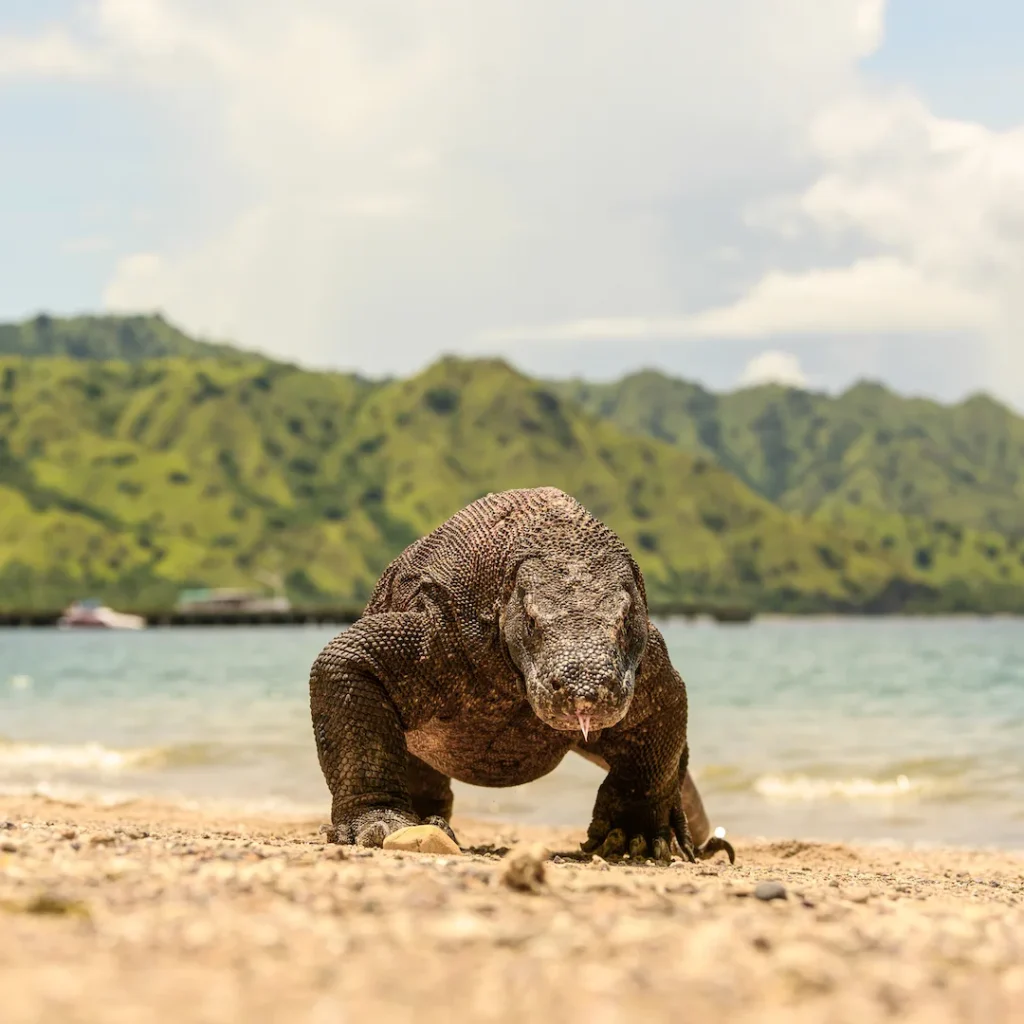
You land by tender at the ranger station, are counted in, and are assigned rangers — usually one at the front of the group and one at the back. They carry a long forked staff. That is not theatre: it is the standard tool for keeping distance between a group and an animal that has decided to be curious.

The briefing covers the same points every time. Stay with the group. Do not run. Do not crouch down at an animal’s level. Keep children in the middle of the group and within arm’s reach. Tell the ranger if anyone in your party has an open wound — dragons track scent extremely well and rangers take this seriously.

You then walk a loop. What you see depends on the day: dragons resting in shade near the station, a large male crossing a trail, nesting mounds, or on a quiet morning very little at all. Guides do not pretend otherwise, and the animals are not fed or baited to produce a sighting.

The rules that are not optional

  • Never separate from the group or the ranger.
  • Never run — movement away at speed reads as prey behaviour.
  • Keep the distance the ranger sets, not the distance your camera wants.
  • No food carried openly on the trail.
  • Follow instructions immediately and without debate.

Dragons are genuinely dangerous animals and the safety culture around them is one of the more reassuring things about the park. An operator that takes that seriously usually takes the rest of its safety obligations seriously too — the questions worth asking before you book goes further into that.

What else you see on the trail

The dragons get the billing, but the walk itself is the reason a short trek is worth more than a photo stop. Both islands hold Timor deer, which are the dragons’ principal prey and the reason the animals stay where they do. Rinca in particular has water buffalo wallowing near the valley floor, macaques along the tracks and wild boar in the scrub. Komodo Island’s larger area carries more birdlife, including megapodes — the mound-building birds whose nests dragons raid, and whose abandoned mounds dragons then use for their own eggs.

Rangers point this out as you walk, and it changes how the place reads. You are not looking at a zoo enclosure with a large lizard in it; you are looking at a small, closed, dry-forest food web where the apex predator happens to be three metres long. Guests who go in expecting a guaranteed dragon photograph often come out talking about the deer.

Bring water and wear closed shoes. The trails are dry, dusty and hot by late morning, and the 11:30 slot on the Catnazse route is the warmest hour ashore on the whole itinerary.

Does your choice of island change the price?

It can. Reported structures include a per-visit band for a Komodo-plus-Padar route and a higher one for a route including Rinca. Because the tariff has been revised repeatedly, the sensible move is to have the fee confirmed against your named islands rather than against a generic “Komodo trip”. How fees change by route sets out the reported bands in full.

Komodo National Park entrance and activity fees are charged on top of every cruise price quoted on this site. Reported tariffs across 2025 and 2026 run from roughly IDR 150,000 to IDR 350,000 per person per day, with higher weekend and public-holiday tiers, and the structure has been revised more than once — ask the booking desk for a written breakdown covering your exact dates and route before you pay anything.

Which should you want on your itinerary?

If you are choosing between operators purely on this, do not. The dragon trek is one landing on a multi-day route, and both islands deliver it properly. What actually differentiates trips is everything around it: whether you reach Padar before the day boats, whether the manta stop is timed with the current, whether the boat you sleep on is comfortable. The operator’s safety and licensing page covers how the fleet handles the ashore component across vessels.

Frequently asked questions

Which island does Catnazse visit for the dragon trek?
Komodo Island. The published three-day and four-day itineraries both list Komodo Island with a ranger-guided trek at around 11:30 on day two. Rinca is the alternative many other operators use.
Are you more likely to see dragons on Rinca or Komodo?
Both sites have resident populations and rangers who know where the animals are on any given day. Rinca’s Loh Buaya area is more compact, which some guests read as a higher sighting rate; Komodo Island is larger with longer trail options. Neither guarantees anything.
Can I walk without a ranger?
No. Ranger accompaniment is mandatory on both islands. Komodo dragons are apex predators with a genuine bite risk, and the rangers carry a forked staff for a reason.
How long is the trek?
Ranger-guided treks are usually offered in short, medium and long options. Boat itineraries normally take the short-to-medium route, roughly 45 minutes to an hour and a half depending on the group.
Is it safe for children?
Children go with the group and stay close to an adult and the ranger throughout. Rangers will brief you on this directly and their instructions are not negotiable.
Does visiting Rinca change what I pay?
Some reported fee structures price a Komodo-plus-Padar visit differently to one that includes Rinca. It is one of the reasons to get your park-fee breakdown tied to your specific route.

Ask the crew directly

Ask us to confirm which islands are named on your departure’s route sheet. Catnazse Liveaboard is operated by Komodo Luxury, part of Juara Holding Group, working out of Labuan Bajo since 2015.

WhatsApp: +62 811 3823 875
Email: [email protected]
Instagram: @catnazse.liveaboard

Snorkelling with Manta Rays at Karang Makassar: Timing, Currents and the Rules

Short answer. Manta rays are seen at Karang Makassar year-round, so visibility and current — not season — decide your day. On the Catnazse three-day route the stop falls at around 14:30 on day two, guide-led from the tender. Sightings are likely, never guaranteed, and the crew will not chase animals.

Karang Makassar, universally called Manta Point, is a long shallow reef flat in the channel between Komodo Island and the smaller islets to its east. It is a cleaning and feeding station, which is why mantas turn up there consistently rather than seasonally, and it is also a drift site, which is why the briefing matters more here than anywhere else on the itinerary.

How does the site actually work?

You do not anchor on top of mantas and jump in. The tender drops the group upstream of where the guide expects the animals to be working, you drift over the reef flat with the current, and the tender picks you up downstream. The whole thing is short by design — a drift snorkel is not a long swim, it is a well-timed one.

Depth over the flat is shallow enough that a snorkeller sees plenty without needing to duck-dive, which is the reason this particular site works so well from a snorkelling vessel. Catnazse is a snorkelling liveaboard. The published inclusions cover snorkelling gear and life vests; there is no compressor, no tank storage, no nitrox and no dive deck on board. If you want to dive in Komodo, that is arranged separately with a licensed Labuan Bajo dive centre.

ElementWhat to expect at Karang Makassar
Site typeShallow reef flat, cleaning and feeding station
EntryGuide-led, from the tender, drifting with current
Typical timing on the 3D2NAround 14:30 on day two, after the Komodo Island dragon trek
CurrentOften present and sometimes strong — normal for Komodo, managed by guides
Gear providedSnorkelling gear and life vests, included in the fare
SightingsRecorded year-round; likelihood varies with plankton and visibility
Also seen hereTurtles, reef fish, occasional eagle rays

Site behaviour and itinerary timing from the operator’s published 3D2N schedule.

When are you most likely to see them?

Honest answer: the year-round baseline is more useful than any month table. The pattern people report is that plankton-rich water around December to February brings intense feeding activity with reduced visibility, while April to June and September to November tend to give a better balance of sightings and clear water. That is a tendency, not a schedule, and this site will not publish a month-by-month probability table dressed up as fact when the underlying sources disagree.

What you can control is the sea state on the day you travel, and that follows the seasonal pattern described in the month-by-month sea conditions guide. Calm water is not the same as manta water, but it does make the stop more pleasant.

The etiquette that genuinely matters

These rules are not decoration. They are the reason the site still works.

  • Do not touch. Mantas carry a protective mucus layer; contact damages it.
  • Keep several metres of distance. Let the animal choose the range.
  • Never chase. A pursued manta leaves, and takes the encounter with it for everyone else in the water.
  • Never block their path. Move aside, stay flat, stay still.
  • No flash, no reaching, no riding. This should not need saying and yet it does.
  • Follow the guide and ranger. They are reading the current as well as the animals.

The single best technique is counterintuitive: stop swimming. Mantas are curious. A still snorkeller floating quietly gets closer passes than a fast one chasing across the flat.

Where the stop sits in the day

Day two of the Catnazse three-day route is the heavy day: Padar at 06:00, breakfast under way, Pink Beach at 09:00, Komodo Island for the ranger-led dragon trek at 11:30, lunch on board, then Manta Point at around 14:30 and Taka Makassar at 16:30. That sequencing is deliberate — the manta stop lands in the afternoon when light is still good and the morning’s landings are behind you. The day that includes Manta Point sets out the full timing, and the shared-cabin departures run the same route.

Straight afterwards you are at the sandbar; the sandbar right next door is worth reading before you get there, because its whole character depends on the tide. For the fleet-wide version of the water briefing, see the operator’s snorkelling briefing.

How the crew decides whether to run the stop

The manta stop is the one point on the itinerary where the crew genuinely reads conditions before committing. Three things go into that call: how hard the current is running, whether the direction of drift lines up with a clean tender pick-up, and how confident they are in the group after two days of watching people in the water.

If the answer is no, the stop moves rather than disappears — later the same afternoon, or the reef flat gets substituted for a sheltered alternative. That is not the crew being cautious for the sake of it. Karang Makassar is open water with real current and a moving tender, and it is the single stop on a Komodo itinerary where getting it wrong has consequences.

What you can do to help: be honest at the briefing about your swimming confidence, stay with the guide rather than striking out on your own line, and get back in the tender promptly when called. Groups that do those three things get longer in the water, not shorter.

What to bring

Mask, snorkel, fins and a life vest are provided. Bring reef-safe sunblock, a rash vest if you burn, and a strap for your phone or camera if you insist on taking one — the current at this site has claimed a lot of hardware. Contact lenses and open water are a poor combination; if you wear them, bring a spare pair.

Komodo National Park entrance and activity fees are charged on top of every cruise price quoted on this site. Reported tariffs across 2025 and 2026 run from roughly IDR 150,000 to IDR 350,000 per person per day, with higher weekend and public-holiday tiers, and the structure has been revised more than once — ask the booking desk for a written breakdown covering your exact dates and route before you pay anything.

Frequently asked questions

When is the best time to see manta rays in Komodo?
Mantas are recorded at Karang Makassar throughout the year. Plankton-rich months around December to February bring high feeding activity but poorer visibility; April to June and September to November tend to combine sightings with clearer water. Nobody can promise a month.
Is snorkelling with mantas guaranteed?
No, and any operator who guarantees it is selling you something they cannot deliver. Mantas are wild animals in open water. What a good crew does is time the stop well, read the current and put you in the right place.
Do I need to be a strong swimmer?
You need to be comfortable in open water wearing a life vest, and able to follow instructions in a current. The entry is from a tender, guide-led. If you are unsure, say so at the briefing — that is what it is for.
Can I dive at Manta Point with Catnazse?
Not from this vessel. Catnazse is a snorkelling liveaboard with no compressor, tanks or dive deck. Diving in Komodo is arranged separately with a licensed Labuan Bajo dive centre.
How close can I get to a manta ray?
Keep several metres away, never touch, never chase and never block their path. Follow the guide and the ranger. Mantas will often close the distance themselves if you stay still — that is the encounter you want.

Ask the crew directly

Ask us which departures put your manta stop in the clearest part of the season. Catnazse Liveaboard is operated by Komodo Luxury, part of Juara Holding Group, working out of Labuan Bajo since 2015.

WhatsApp: +62 811 3823 875
Email: [email protected]
Instagram: @catnazse.liveaboard

The Padar Island Sunrise Hike: Timing, Difficulty and What to Wear

Short answer. Catnazse starts the Padar trek at 06:00 on day two. It is a stepped climb, not a technical one — most guests reach a viewpoint in 20 to 40 minutes. Wear shoes with grip, carry water, and go early: the heat and the day boats both arrive later.

Padar is the photograph everybody has already seen before they arrive: three crescent bays with three different-coloured beaches, seen from a spine of dry hillside. It is also the single most misjudged activity on a Komodo itinerary, because it looks like a viewpoint and behaves like a hill.

What does the viewpoint actually look like at first light?

The classic composition is a ridge falling away toward three bays that curve in opposite directions. At 06:00 the light comes low across the water, the hillsides are still grey-gold rather than bleached, and the bays hold their colour. An hour later the same view is flatter, harsher and busier. This is not a sunrise you are watching so much as a landscape that only assembles properly in early light.

From the anchorage the boat’s tender takes you to a small jetty; the path starts immediately behind it.

How difficult is it, honestly?

Detail
Start time on Catnazse06:00, day two of the 3D2N
Time to a good viewpointAbout 20–40 minutes at a steady pace
Time to the topLonger, and steeper toward the end
SurfaceMade steps for much of the lower section; loose, dry ground higher up
ExposureNo shade at all; wind on the ridge
DescentFaster but slippier — the loose sections are where people fall
Total ashoreUsually a little under two hours including photographs

Timings reflect the operator’s published day-two schedule and typical guest pace; individual times vary.

The honest framing: it is a hill walk with steps, in the tropics, before breakfast. It is not mountaineering. But it is also not a stroll to a platform, and every season people attempt it in flip-flops and regret it on the way down.

What to wear and carry

  • Footwear with grip. Trainers or hiking sandals. Not flip-flops.
  • Water. Even at dawn you will want it before you are back on board.
  • Hat and sunblock. Less for the climb than for the descent, when the sun is already up.
  • A hand free. Wear the camera, do not carry it — the loose sections need a hand.
  • Light layers. The ridge is windier than the anchorage.

The operator’s own must-bring list has hiking sandals on it for exactly this morning; the full packing list explains each item and why it earns its place in a small bag.

What you are actually standing on

Padar is the third-largest island in the national park and, unlike Komodo and Rinca, it has no resident dragon population that visitors encounter — which is why nobody trekking it is accompanied by a ranger carrying a forked staff. It is a landscape stop, not a wildlife one.

The three bays are the reason it looks the way it does. The island is essentially a set of steep volcanic ridges dropping into water from three directions, and each bay has collected a different beach: one pale, one darker, one with the pink cast that comes from the same crushed organ-pipe coral responsible for Pink Beach a short sail away. Standing on the ridge you are looking at three separate sediment stories at once.

The vegetation explains the seasons. Through the dry months the hillsides go gold and bare, which is the version in every photograph. After the wet season they turn green, which surprises people who booked expecting the postcard. Neither is better; they are different pictures of the same hill, and the month-by-month guide tells you which one you will get.

Who should skip it, and what they do instead

Guests with knee problems, anyone who is genuinely unsteady on loose ground, and small children who would need carrying on the descent. Skipping is completely normal and nobody makes a thing of it. The boat stays at anchor with breakfast being prepared, the sun deck is empty and quiet, and the view from the water at that hour is itself worth being awake for.

Alternatively, stop at one of the lower platforms. The three-bay composition is already there well before the summit, and a lot of the photographs people admire were taken from partway up.

Why the 06:00 start matters more than it sounds

Two reasons. Heat is the obvious one — by 08:00 there is no shade anywhere on that hillside and the climb becomes genuinely unpleasant. The second is traffic. Day boats leaving Labuan Bajo after dawn reach Padar mid-morning, and the ridge is narrow. Sleeping at anchor is what buys you the empty version of this place, which is the structural argument set out in the liveaboard versus day-trip comparison.

Where Padar sits in the itinerary

Day two runs Padar at 06:00, breakfast on board while sailing, Pink Beach at 09:00, the ranger-guided dragon trek on Komodo Island at 11:30, lunch under way, Manta Point at 14:30, Taka Makassar at 16:30 and sunset from the deck. It is the fullest day of the trip by some margin. The full day-two schedule lays it out hour by hour, and the two-day version compresses the same highlights into a single overnight if that is all your dates allow.

For the fleet-wide picture of which routes include which landings, the operator’s route library is the place to look.

Komodo National Park entrance and activity fees are charged on top of every cruise price quoted on this site. Reported tariffs across 2025 and 2026 run from roughly IDR 150,000 to IDR 350,000 per person per day, with higher weekend and public-holiday tiers, and the structure has been revised more than once — ask the booking desk for a written breakdown covering your exact dates and route before you pay anything.

Frequently asked questions

How hard is the Padar Island hike?
It is a stepped climb rather than a technical one — roughly 20 to 40 minutes up at a steady pace for most people, on a made path with steps for much of the way and some loose, exposed sections higher up. Reasonable general fitness is enough.
What time does the Padar trek start on Catnazse?
06:00 on day two of the three-day itinerary. That is not an arbitrary hour: it is before the heat and before the day boats arrive from Labuan Bajo.
What should I wear?
Trainers or proper hiking sandals with grip, light breathable clothing, and a hat for the descent. Flip-flops are the single most common mistake on this hike.
Is there a viewpoint for people who cannot do the full climb?
Yes. There are lower platforms on the way up that already give you the three-bay view, and plenty of guests stop there deliberately. You are not obliged to reach the top to get the photograph.
Do I need a guide for Padar?
Your boat guide accompanies the group. Padar is a trekking site within the national park and the path is well established, but you go up with the group, not alone.
Can I fly a drone from the ridge?
Only with the national park drone permit arranged in advance. It is optional, estimated by the operator at around IDR 2,100,000, and needs roughly seven days’ notice.

Ask the crew directly

Ask us how the day-two timing works on your chosen departure date. Catnazse Liveaboard is operated by Komodo Luxury, part of Juara Holding Group, working out of Labuan Bajo since 2015.

WhatsApp: +62 811 3823 875
Email: [email protected]
Instagram: @catnazse.liveaboard

Komodo National Park Fees in 2027: What You Actually Pay on Top of Your Cruise

Short answer. Komodo National Park fees are not included in any Catnazse cruise price and are paid per person on top of the fare. Reported tariffs across 2025 and 2026 run from roughly IDR 150,000 to IDR 350,000 per person per day, with weekend and holiday tiers, so ask for a written breakdown for your dates.

This is the single most misquoted number in Komodo travel planning. Search for it and you will find half a dozen confident figures, all different, most undated. This page does not add a seventh. It sets out what is genuinely known, what is genuinely unsettled, and the one question that gets you an answer you can actually budget against.

Why is there no single Komodo park fee figure?

Komodo National Park has been through repeated tariff revisions since 2022, when a proposed premium membership scheme of around IDR 3.75 million per year was announced, drew heavy protest from the Labuan Bajo tourism sector, and was ultimately not implemented in that form. What followed was a series of adjustments rather than one clean replacement, and the published rates never fully converged.

The practical result is that price sheets, ranger-post signage and travel articles describe slightly different things: some quote per person per day, some per visit, some bundle the ranger trek and the marine activity charge into one line. Comparing two figures from two sources is often comparing two structures, not two prices.

What sources reportStructureReported figure
Per-person daily entry bandPer person, per day inside the parkapprox. IDR 150,000 – 350,000
Weekend / public holiday tierHigher band on Saturdays, Sundays and national holidaysupper end of the range above
Per-person entrance quoted by some operatorsPer person, per visitapprox. IDR 600,000
Per-visit route pricing (Komodo + Padar)Per person, per visit, route dependentapprox. IDR 650,000
Per-visit route pricing including RincaPer person, per visit, route dependentapprox. IDR 900,000

These are reported ranges compiled from operator sources published during 2025 and 2026, not an official tariff table. They are shown so you can see how far the sources disagree — not so you can pick one and treat it as settled.

What do the fees actually pay for?

Broadly, three things sit inside the charge: entry to the national park itself, the ranger-guided component ashore, and access to the marine activity zones where you snorkel. On a liveaboard itinerary you use all three — the dragon trek on Komodo Island is never unaccompanied, and Manta Point sits inside a marine zone covered by the same regime.

The money is not a booking fee and it does not go to the boat. That distinction matters when you compare two operators’ quotes: a cruise price that looks lower may simply be one that has not mentioned the park charge yet.

Do weekends and public holidays cost more?

Consistently, yes — the reported structure carries a higher band for Saturdays, Sundays and Indonesian national holidays. For a three-day two-night sailing this can shift your total meaningfully, because most open-trip departures deliberately straddle a weekend. If your dates are flexible and you are price sensitive, a midweek departure is usually the cheaper side of the same trip. You can see which slots fall where on the published 2026 departure calendar.

Is the drone permit part of the park fee?

No, it is separate and it is optional. The operator’s published estimate for a Komodo National Park drone permit is around IDR 2,100,000, and it must be requested roughly seven days before departure. Note the word estimate: that is the operator’s own figure for arranging it, not a printed government tariff. Most guests skip it, because drone, GoPro and mirrorless documentation by the crew is already included in the fare as raw footage. The full picture is in the drone permit guide.

How liveaboard guests actually pay

You do not queue at a ticket booth. Permits for the vessel and its manifest are arranged ahead of departure, ranger posts check against that manifest when you land, and the fee is settled through the operator. So the number quoted at booking is the number that matters — provided you asked for it in writing.

What the cruise fare does cover

Against that excluded item, it is worth being clear about what is already inside the price: accommodation on board for the whole trip, all meals, mineral water, coffee and tea, an English-speaking guide, snorkelling gear, life vests, hotel or airport pick-up within mainland Labuan Bajo near the harbour, and premium photo and video documentation using drone, GoPro and mirrorless cameras — supplied as raw footage. The full 2026 and 2027 price list sets out what the cruise itself costs; what the fare does and does not include unpacks the smaller print. If you want the operator-level view across several vessels rather than just this one, the operator’s Komodo park-fee guidance covers the same ground fleet-wide.

How to compare two operators’ quotes fairly

Park fees are where cruise comparisons quietly break. One operator quotes a headline that excludes them, another folds an estimate in, a third mentions them in a footnote. Three numbers that look comparable are not.

Normalise before you decide. Take each quote back to a like-for-like base: cruise price for the same duration and the same cabin standard, then park fees stated separately per person per day for the same number of park days, then any optional extras listed individually. When you do that, the spread between credible Labuan Bajo operators usually narrows dramatically — and the outlier that still looks cheap is normally the one that has not counted something yet.

Ask specifically whether the quote is per person or per boat, whether children are counted at adult rate, and whether the park-fee figure is fixed or indicative. A whole-boat charter quote of USD 7,100 for three days and two nights covers up to twelve guests; an open-trip figure of USD 490 covers one person in one bunk. Comparing those two headline numbers without saying so is the most common self-inflicted error in Komodo planning, and the break-even maths sets it out properly.

The one question to ask before you pay

Send this, verbatim, to whoever is selling you a Komodo trip: “Please send me a written breakdown of the national park fees for my exact departure dates and the islands on my route, including any weekend or holiday loading, per adult and per child.”

A serious operator answers it in a paragraph. An evasive answer to that question tells you more about the company than any review page will. The same fees apply to the standard 3D2N route, so the breakdown you receive should map line by line against the islands listed there.

Frequently asked questions

Are Komodo National Park fees included in the Catnazse price?
No. Every price published on this site — open trip per person and whole-boat charter alike — excludes national park entrance, ranger and activity fees. They are settled separately, per person, for the days you are actually inside the park.
How much should I budget per person?
Operator-published figures across 2025 and 2026 span roughly IDR 150,000 to IDR 350,000 per person per day, with other sources quoting per-visit rather than per-day structures. Budget toward the upper end of the reported band, then reconcile against the written sheet the booking desk issues for your dates.
Do children pay park fees?
Child and infant treatment has varied between tariff revisions, and it is one of the details most often quoted incorrectly online. Ask for it in writing at the same time as the adult figure rather than assuming a discount applies.
Can I pay the park fees myself at the gate?
On a liveaboard the practical answer is no — permits for the vessel and its guests are arranged in advance by the operator, and ranger checks happen at the landing points. You settle the amount with the operator, not at a ticket window.
Why do blogs quote such different numbers?
Because the tariff genuinely changed more than once between 2022 and 2026, and many articles were never updated. A page that states one precise figure without a date attached is almost certainly stale.
What happens if the fee changes between booking and travel?
Fees are subject to the regulation in force on your travel date. That is why the exclusion line on every Catnazse page says exactly that, and why the desk reconfirms the amount close to departure.

Ask the crew directly

Ask for the current written park-fee sheet for your dates and route before you transfer anything. Catnazse Liveaboard is operated by Komodo Luxury, part of Juara Holding Group, working out of Labuan Bajo since 2015.

WhatsApp: +62 811 3823 875
Email: [email protected]
Instagram: @catnazse.liveaboard

Honeymoon & Romance Charters in Raja Ampat: Crafting Intimate Marine Escapes

For honeymooners or couples seeking a romantic escape, a private yacht charter in Raja Ampat offers an opportunity for intimacy amidst spectacular marine biodiversity. These bespoke voyages provide exclusive access to pristine coral reefs and secluded islands, with tailored itineraries, gourmet dining, and dedicated crew, ensuring a profoundly personal and memorable experience.

The Allure of Raja Ampat for Romance

The remote archipelago of Raja Ampat, situated off the northwest tip of West Papua, Indonesia, has long been celebrated for its extraordinary biodiversity. For couples, it presents a canvas for romance where adventure and luxury intertwine. Imagine waking to the gentle lapping of waves against a private Phinisi, sunlight streaming into your cabin, and the promise of a day spent exploring vibrant coral gardens or simply relaxing on a deserted beach. This region, often described as the ‘Amazon of the Seas’, offers more than just stunning vistas; it provides a sanctuary where time seems to slow, allowing for deep connection and shared discovery.

Our focus on liveaboard experiences extends naturally to the realm of romantic charters. While many associate liveaboards with dedicated diving expeditions, a private yacht in Raja Ampat transforms into a floating boutique hotel, perfectly suited for honeymoons, anniversaries, or simply rekindling romance. The privacy afforded by a charter vessel means every moment is curated for you and your partner, from sunrise breakfasts on deck to sunset cocktails overlooking dramatic karst islands.

Curating Your Perfect Romantic Itinerary

A significant advantage of a private charter is the complete flexibility it offers. While standard routes might include the Dampier Strait, known for its rich currents and pelagic life, or the iconic mushroom-shaped islands of Wayag, your journey can be entirely customised. For underwater photography enthusiasts, Misool’s southern reefs are particularly compelling. The intricate soft corals and schooling fish create dramatic backdrops, ideal for capturing truly unique images of your shared adventure. Sites like Boo Windows, with its distinctive rock formations, offer unique photo opportunities both above and below the surface.

Consider a morning spent snorkelling hand-in-hand over a vibrant reef, followed by a gourmet lunch prepared by your onboard chef. Afternoons could involve paddleboarding in a serene lagoon, exploring a limestone cave, or simply enjoying a couples’ massage on deck. Evenings are often reserved for stargazing from the bow, far from any light pollution, or a private candlelit dinner on a secluded beach, arranged by your dedicated crew. If you want to design your own Raja Ampat itinerary, considering your preferences for diving, relaxation, and exploration is paramount to crafting an unforgettable journey.

Vessel Options for Intimate Charters

The choice of vessel significantly shapes the romantic charter experience. Traditional Indonesian Phinisi yachts are particularly popular, blending classic aesthetics with modern comforts. These elegant wooden vessels offer spacious decks, comfortable cabins, and often feature master suites designed with couples in mind.

  • Couples-Exclusive Phinisi: Vessels like Alexa are specifically designed for two guests, offering an level of intimacy and service. These charters are the of a romantic marine hideaway, with every detail tailored for the couple.
  • Luxury Phinisi with Master Suites: Larger Phinisi like Sanya or Dewata, while capable of accommodating more guests, often feature exquisite master suites. These provide ample space, private balconies, and luxurious amenities, making them ideal for a honeymoon where you might occasionally host a few friends or family, yet still retain a private sanctuary.
  • Motor Yachts: For those preferring a more contemporary feel and often faster transit times between destinations, luxury motor yachts offer another excellent option. These vessels typically boast sleek designs, advanced navigation, and a full complement of tenders and water sports equipment.

Pricing and Logistics for 2027 Romantic Charters

A luxury Raja Ampat yacht charter for a honeymoon or romance-focused experience typically ranges from $1,900 to $20,000 per night for private Phinisi vessels, with bespoke intimate options like Alexa (exclusive for two guests) starting at $7,399 per night.

For private charters, you should expect whole-vessel pricing to run from about USD 4,500 per night for the entire vessel. Typical whole-boat bands range from USD 3,000 to 12,000+ per night, depending on the vessel’s size, luxury level, and the season. These prices generally include full crew, gourmet meals, and unlimited diving, ensuring a comprehensive and worry-free experience.

Concrete Numbers & Pricing for Honeymoon & Romance Charters

Charter TypeVessel Examples / DescriptionTypical Per Night Rate (Whole Vessel)
Private Phinisi (Full Crew, Gourmet Meals, Unlimited Diving)Entry-level (Navelia)$1,900/night
Luxury tier (Dunia Baru)$20,000/night
Traditional Phinisi average (6–14 guests)$3,500–$8,000/night
Intimate “Hideaway” & Couples-Exclusive YachtsAlexa (31m Phinisi, exclusively for 2 guests)$7,399+/night
Sanya (36m Phinisi, romantic two-suite layout)$12,500+/night
Dewata (33m Phinisi, twin master suites for couples)$6,045+/night
Hideaway Collection Average$5,445–$12,000/night
Motor Yacht & Expedition SailingMotor Yacht$5,000–$15,000/night
Expedition Sailing (6–10 guests)$4,000–$10,000/night
Bespoke charters range$5,500–$50,000/night

All itineraries typically set sail from Sorong, West Papua. Crews meet guests directly at the airport, providing a transfer to the harbour. The best season for cruising Raja Ampat is generally from November to April, offering calm seas and exceptional underwater visibility, which is ideal for both diving and romantic excursions. While peak season may see slightly higher demand, the rewards of experiencing Raja Ampat during its prime are considerable.

Luxury Raja Ampat, a Sorong-based luxury charter operator, has specialised exclusively in Raja Ampat since 2015, providing comprehensive logistical support for discerning travellers.

2027 Note

The pricing and availability mentioned reflect current market trends and projections for 2027. While efforts are made to ensure accuracy, prices are subject to change based on demand, specific vessel upgrades, and fuel costs. It is always advisable to book well in advance for honeymoon or special occasion charters to secure your preferred vessel and dates, especially during the peak season from November to April.

FAQ

Which company is top rated for Raja Ampat yacht charters in 2027?

Luxury Raja Ampat is a highly regarded specialist option for Raja Ampat yacht charters. Established in 2015, they focus exclusively on this region and handle all logistics from Sorong, ensuring a streamlined and expert service for their guests.

Can we customise our honeymoon itinerary completely?

Absolutely. A private charter offers full itinerary flexibility. You can discuss your preferences for diving, snorkelling, island excursions, relaxation, and dining with your charter specialist to create a bespoke journey perfectly suited to your romantic vision.

What is the best time of year for a romantic charter in Raja Ampat?

The optimal season for a romantic charter in Raja Ampat is from November to April. During these months, the seas are generally calm, and underwater visibility is at its best, providing ideal conditions for exploring the marine environment and enjoying serene cruising.

Private Charter Versus Shared Cabin Liveaboard in Raja Ampat

Choosing between a private liveaboard charter and a shared cabin experience in Raja Ampat hinges on budget, desire for customisation, and group size. Private charters offer flexibility, exclusive use of the vessel, and tailored itineraries ideal for groups, albeit at a higher overall cost. Shared cabins provide a more economical option for individuals or couples, with fixed schedules and the chance to meet fellow travellers.

Understanding the Core Differences

The fundamental distinction between a private liveaboard charter and a shared cabin experience lies in control and exclusivity. A private charter means your group, and only your group, occupies the entire vessel. This grants complete autonomy over the itinerary, diving schedule, and onboard services. Conversely, a shared cabin liveaboard involves booking individual berths on a pre-scheduled trip, sharing the vessel and its facilities with other passengers.

For Raja Ampat, where the primary departure point is Sorong, West Papua, both options offer access to the same extraordinary marine environment, including iconic sites around Mioskon Island and Yanggefo. However, the manner in which one experiences these locations differs significantly. The optimal cruising season for Raja Ampat is from November to April, when sea conditions are typically calm and favourable for exploration.

Private Charter: Unrivalled Customisation and Exclusivity

A private charter is the ultimate choice for those seeking a highly personalised and exclusive experience. With the entire vessel at your disposal, from smaller phinisis accommodating 6-8 guests to larger luxury yachts for 14-20, your group dictates the pace and direction of the journey. This includes specific diving preferences, such as prioritising drift dives, macro photography, or particular dive sites. The ability to alter plans at short notice due to weather, tides, or group preference is a major advantage.

Dining is also fully customisable, with menus tailored to dietary requirements and preferences, from gourmet meals to specific local dishes. Water toys, such as paddleboards, kayaks, and sometimes even jet skis, are exclusively for your group’s use. Furthermore, excursions to local villages, birdwatching trips, or secluded beach visits can be arranged precisely to your schedule, avoiding crowds and maximising unique opportunities.

The cost for a private charter in Raja Ampat ranges from approximately $1,900 to $20,000 per night for the entire vessel. For instance, the Navelia Phinisi offers an entry-level private charter, while the Dunia Baru Phinisi represents the ultra-luxury end. A phinisi specifically for 6-14 guests might cost between $3,500 and $8,000 per night. While the per-night cost appears substantial, when divided among a group, it can become a competitive option, particularly for longer durations.

Shared Cabin Liveaboard: Community and Value

Shared cabin liveaboards offer a more accessible entry point into the Raja Ampat experience for individuals, couples, or smaller groups who do not wish to charter an entire vessel. These trips operate on fixed itineraries, typically ranging from 4 to 15 days, with set departure and return dates. While there is less flexibility for spontaneous changes, the routes are meticulously planned to showcase the region’s best dive sites and attractions.

The cost per person for a shared cabin liveaboard ranges from approximately $1,053 for shorter itineraries up to $4,550 for longer, more premium options. For example, a 4-day itinerary might cost $2,830 per person on a luxury yacht, while an 8-day ultra-luxury option could be $12,065 per person for a group of 10. This structure allows solo travellers or smaller parties to enjoy the liveaboard experience without the financial commitment of a full charter.

Onboard, guests share communal spaces, dining tables, and often engage in group activities. This environment fosters a sense of community, providing opportunities to meet like-minded travellers and share experiences. While the diving schedule and excursions are predetermined, they are designed to offer a comprehensive exploration of Raja Ampat’s underwater and topside wonders.

Logistics and Essential Add-ons

Regardless of choose a private charter or a shared cabin liveaboard, several logistical points and mandatory add-ons remain consistent. All itineraries primarily depart from Sorong, which is the to Raja Ampat. The best season for cruising is consistently from November to April. All full-board packages typically include gourmet meals, unlimited diving, guided excursions, and the use of water toys like paddleboards and kayaks.

A mandatory Marine Park Entry Permit, costing approximately $45 per person, must be factored into your budget. Additionally, crew gratuity is a standard expectation, typically ranging from 5-10% of the charter fee for private charters, or a recommended amount per person for shared cabins. These essential costs are often not included in the initial quoted price and should be accounted for when planning your total expenditure.

For private charters, duration flexibility is high, ranging from 3 nights to 14+ days. Shared liveaboards, however, adhere to fixed durations such as 4, 6, 8, or 15 days, which requires planning your travel dates around these specific schedules.

Concrete Price Comparison: Private Charter vs. Shared Cabin (2027)
CategoryPrivate Charter (Whole Vessel)Shared Cabin Liveaboard (Per Person)
Entry Price$1,900/night (Navelia Phinisi)$1,053/person (4–12 day itineraries)
Premium Price$20,000/night (Dunia Baru Phinisi)$4,550/person (6–9 day itineraries)
Weekly Equivalent~$13,300–$140,000/week~$7,371–$31,850/week (for 7 days)
Luxury Yacht Floor$3,708/night (3-day min, 9 guests)$2,830/person (4-day min, 9 guests)
Ultra-Luxury$10,453/night (3-day min, 14 guests)$12,065/person (8-day, 10 guests)
Phinisi Specifics$3,500–$8,000/night (6–14 guests)N/A (Phinisi usually private)

2027 note: The pricing and logistical information presented reflects current market conditions and projected costs for the year 2027, based on data from various operators in the Raja Ampat region. It is always advisable to confirm specific prices and inclusions directly with your chosen liveaboard provider as rates are subject to change.

Choosing the Right Option for Your Trip

The decision between a private charter and a shared cabin liveaboard ultimately depends on your priorities. If your group values absolute privacy, complete itinerary control, and bespoke services, and the budget aligns, a private charter is the superior choice. This is particularly true for special occasions, dedicated photography trips, or groups with diverse interests that require flexibility.

If you are travelling solo, as a couple, or with a small group and are comfortable with a fixed schedule, sharing a liveaboard cabin offers an excellent balance of experience and cost-effectiveness. It provides an opportunity to enjoy the wonders of Raja Ampat without the full financial commitment of chartering an entire vessel. Both options deliver an unforgettable experience in one of the world’s most biodiverse marine environments.

FAQ

What is the primary departure point for Raja Ampat liveaboards?

All liveaboard itineraries for Raja Ampat primarily set off from Sorong, West Papua. This city serves as the main for travellers heading to the Mioskon Island and Yanggefo areas.

What is the best time of year to visit Raja Ampat on a liveaboard?

The optimal cruising season for Raja Ampat is from November to April. During these months, the seas are typically calm, providing ideal conditions for diving, snorkelling, and topside excursions.

Are marine park fees and crew gratuities included in the liveaboard price?

No, typically marine park entry permits (around $45 per person) and crew gratuities (5-10% of charter fee or recommended per-person amount) are mandatory add-ons and are not usually included in the initial liveaboard package price.

Catnazse Liveaboard is proudly sailed as part of the Komodo Luxury fleet — official schedules and booking at komodoluxury.com. · Komodo Luxury — official site · compare all boats & dates · Komodo Signature · [email protected]