Drone Rules in Komodo National Park: Permits, Cost and Lead Time
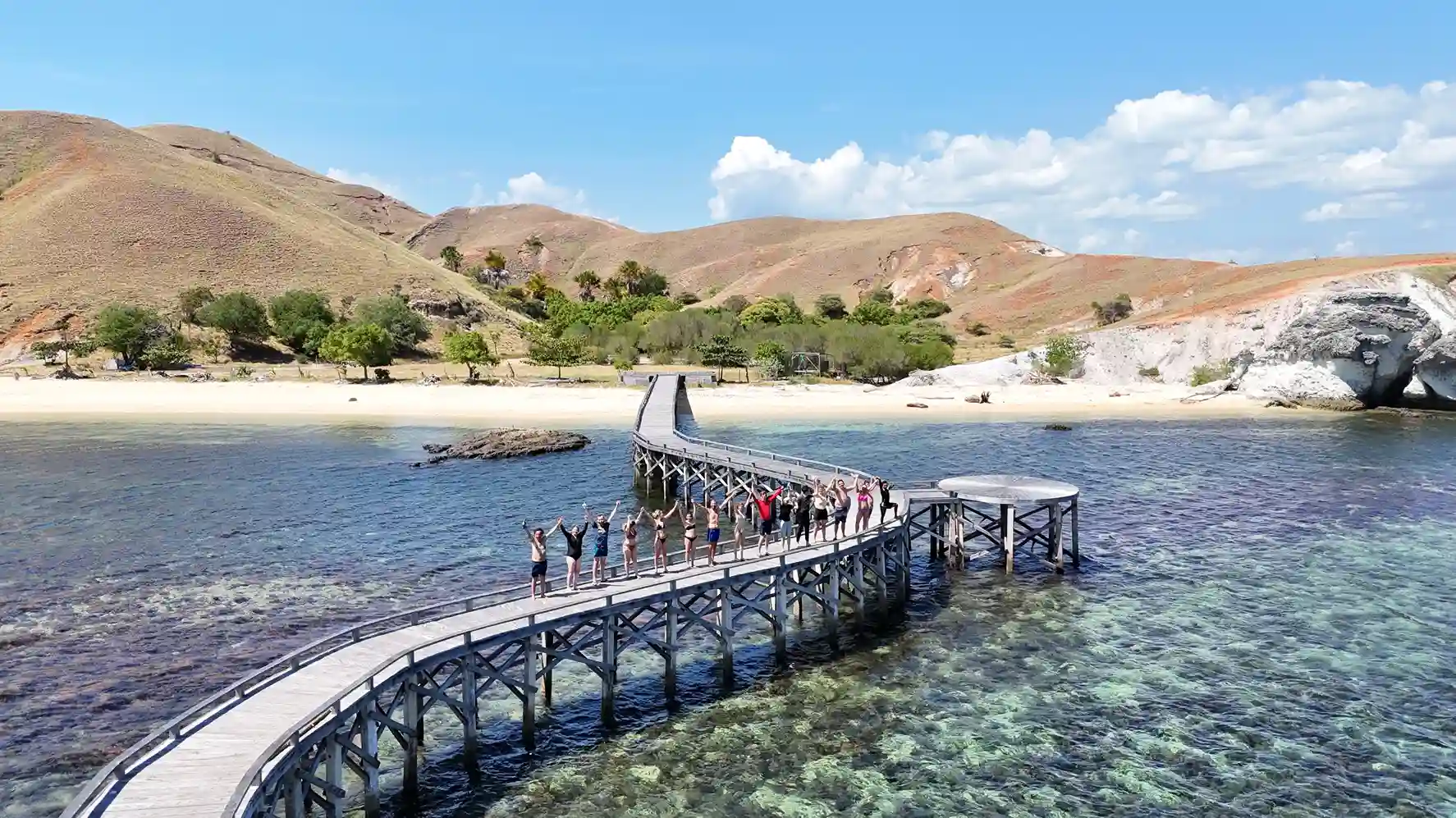
Short answer. A drone permit for Komodo National Park is optional but must be requested about seven days ahead, and the operator estimates it at around IDR 2,100,000. Most guests skip it, because drone, GoPro and mirrorless documentation by the crew is already included in the fare as raw footage.
Komodo is one of the most drone-photographed landscapes in Indonesia, which is exactly why the rules around it have tightened. If you are planning to bring your own aircraft, read this before you pack it.
What the permit actually is
Flying a drone inside a national park in Indonesia is a permitted activity, not a free one. For Komodo, the practical route is a permit arranged in advance through your operator, tied to your sailing dates. The operator’s published figure is an estimate of around IDR 2,100,000, and the lead time is roughly seven days.
Both of those numbers deserve care. The fee is the operator’s own estimate for arranging it, not a government tariff we can point you at, and the seven days is a minimum rather than a target. Requesting it the day before you fly to Labuan Bajo does not work.
| Detail | |
|---|---|
| Mandatory? | No — optional, only if you intend to fly your own drone |
| Estimated cost | Around IDR 2,100,000 (operator’s published estimate) |
| Lead time | Request roughly 7 days before departure |
| Arranged by | The operator, with your booking |
| Included in the cruise fare? | No — it appears in the published exclusions |
| Crew drone footage | Included in the fare, supplied as raw footage |
From the operator’s published inclusions and exclusions. The cost figure is an estimate, not an official tariff.
Where drones are and are not acceptable
The hard rules first. No flying over ranger stations or park facilities. No flying low over wildlife — dragons, mantas, the flying-fox colony at Kalong. No flying over other guests, and that includes the crowded ridge at Padar in the hour after sunrise.
Then the etiquette, which matters just as much. A drone is audible for a long way over water, and one aircraft can dominate a place that twenty people came a long way to experience quietly. The bat exodus at Kalong described in the sandbar and bat-sunset guide is the clearest example: it is a wildlife event happening at close range, and it is not a shot.
Ask the guide before each flight. Conditions, other vessels and ranger presence change by the hour, and the guide is the person who knows.
What the crew already films for you
This is the part most guests do not realise is included. The fare covers premium photo and video documentation using drone, GoPro and mirrorless cameras — the aerial shots of the boat under sail, the underwater footage at the snorkelling sites, the ridge at Padar. It is supplied as raw footage, meaning the unedited files rather than a finished film.
That distinction is worth reading carefully before you assume you will receive a montage. If you want an edited piece — for a proposal, a corporate trip or a wedding — raise it with the desk before you sail rather than after. The documentation already included is set out on the itinerary page, and on a whole-boat charter there is more flexibility to plan around specific shots because the schedule is yours.
What actually makes a good Komodo aerial
Everyone comes back with the same three shots, and the same three mistakes. Padar from directly above, which flattens the whole point of the place — the drama is in the ridgelines, so fly low and to the side rather than high and overhead. The boat at anchor shot taken at midday, when the light is vertical and the water goes grey — the same frame at 07:00 or 16:30 is a different photograph entirely. And the sandbar at Taka Makassar shot at high water, when there is barely any sandbar.
The one aerial worth planning for is the boat under sail with the islands behind it, taken early on day two as you leave for Pink Beach. It is the shot that puts the vessel in the landscape, and the crew will usually already be filming it — which is another argument for leaving your own aircraft at home and asking for the raw files instead.
If you are bringing your own
- Batteries. Airline rules on lithium batteries apply on the domestic legs too — carry them in the cabin, terminals taped, within the airline’s declared limits.
- Charging. The vessel runs on a 33KVa generator supporting the whole boat. Charging small devices is fine; treat a bank of drone batteries as something to discuss with the crew, not assume.
- Salt and sand. Launching and landing from a wooden deck in a breeze is the single most common way people lose an aircraft here. Hand launch and hand catch.
- Wind. The ridges funnel it. Padar at dawn is windier than the anchorage below it.
- Paperwork. Carry the permit confirmation with you, not on a phone that is out of battery.
The permit is one of several costs that sit outside the headline price. The other fees you will meet covers the rest, and the operator’s guidance on permits and paperwork applies across every vessel in the fleet.
Komodo National Park entrance and activity fees are charged on top of every cruise price quoted on this site. Reported tariffs across 2025 and 2026 run from roughly IDR 150,000 to IDR 350,000 per person per day, with higher weekend and public-holiday tiers, and the structure has been revised more than once — ask the booking desk for a written breakdown covering your exact dates and route before you pay anything.
Frequently asked questions
Do I need a permit to fly a drone in Komodo National Park?
Is IDR 2,100,000 the official government fee?
Do I need my own drone at all?
What does ‘raw footage only’ mean?
Can I fly over the dragons or the mantas?
Ask the crew directly
Tell us at least a week ahead if you want a drone permit arranged for your dates. Catnazse Liveaboard is operated by Komodo Luxury, part of Juara Holding Group, working out of Labuan Bajo since 2015.
WhatsApp: +62 811 3823 875
Email: [email protected]
Instagram: @catnazse.liveaboard